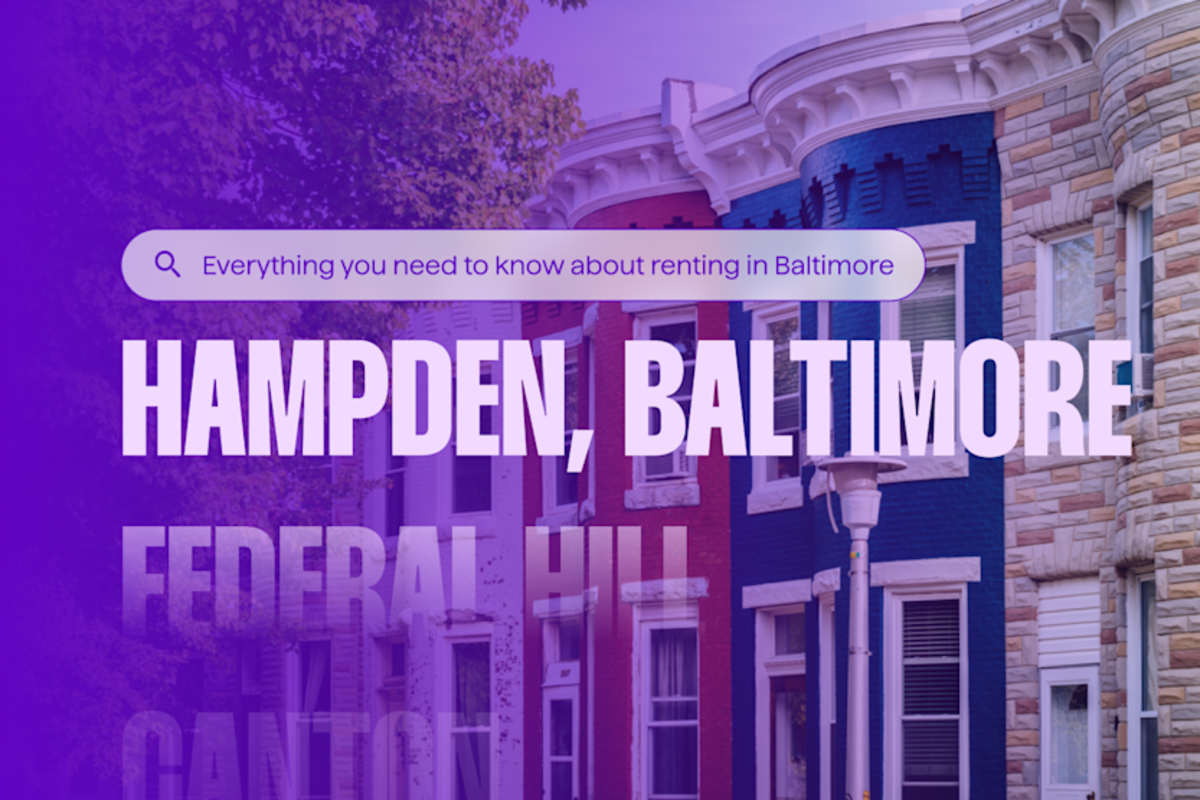
Is Baltimore affordable for renters? Explore 2026 rent trends, average prices by unit size, neighborhood costs, and practical tips to save on rent and utilities in Charm City.
Located on the picturesque shores of the Chesapeake Bay, Baltimore’s historic charm, pretty waterfront views and relative affordability, making it an appealing choice for renters. The birthplace of “The Star-Spangled Banner” offers an average one-bedroom rent of around $1,782 and a cost-of-living index 7.4% below the national average, with groceries, healthcare, and housing all more affordable than much of the country.
For renters, Baltimore offers many perks of the city along with manageable living costs. Your dollar stretches further here thanks to moderate rents, diverse housing options, and a growing job market anchored by education, healthcare, and tech. Trendy neighborhoods like Hampden, and Federal Hill add to the appeal, blending history with modern dining, arts, and nightlife. With its lively culture, walkable districts, and waterfront lifestyle, Baltimore continues to grow as one of the Mid-Atlantic’s most attractive rental destinations.
Thinking of making a move? We’ll break down Baltimore’s latest rent trends, neighborhood dynamics, and how it compares nationally, plus smart ways to save on housing and utilities in Charm City.
Affordability in Baltimore: Key Insights
When you factor everything into the mix, Baltimore comes out to an overall cost of living score of 92.6, according to Sperling’s Best Places, which is below the national baseline of 100.
| Overall Cost of Living Index | 92.6 | 111.8 | 100.0 |
| Grocery | 98.0 | 105.2 | 100.0 |
| Health | 84.6 | 84.2 | 100.0 |
| Housing | 60.2 | 124.1 | 100.0 |
| Median Home Cost | $180,200 | $388,100 | $338,100 |
| Utilities | 107.3 | 105.6 | 100.0 |
| Transportation | 124.4 | 119.3 | 100.0 |
| Miscellaneous | 107.7 | 112.5 | 100.0 |
100 = National average; data sourced from Sperling’s BestPlaces.
For many renters, housing in Baltimore is almost 40% cheaper than the national average which means you’ll get more out of your monthly budget. Still, you’ll want to budget carefully if you’re thinking of living in Charm City.
What Are the Current Trends in Baltimore’s Rental Market?
Baltimore renters are seeing some price stability in 2026, with average rents rising just 0.2% year over year as the city’s housing market cools after several years of steady increases. Rent growth has flattened, giving tenants more space and amenities for less than in pricier metros like Philadelphia. For renters, this means more options and negotiating power, though high-demand neighborhoods like Canton, Federal Hill, and Fells Point continue to command top-tier prices and remain among Baltimore’s most competitive rental markets.
Average Rent Prices in Baltimore, MD
Rent in Baltimore is affordable compared to nearby areas in the Northeast. However rents can fluctuate widely depending on location, square footage, the mix of amenities, and the age of the building. To help you understand how Baltimore compares to the rest of the country, here’s a snapshot of current average rent prices across different unit sizes in the city.
| Average | $2,102 | $1,953 | - 7.1% |
| One-Bedroom | $1,757 | $1,782 | + 1.4% |
| Two-Bedroom | $2,194 | $2,158 | - 1.6% |
| Three-Bedroom | $2,689 | $2,249 | - 16.4% |
What Is the Average Rent of a One-Bedroom Apartment in Baltimore?
As of July 2025, the average rent for a one-bedroom apartment in Baltimore is $1,782 which is slightly above the national rate. Rent growth in Baltimore has risen 1.3% as compared to this time last year with about 1,200 units available for rent. Prices do vary widely based on location, building age, amenities mix and proximity to food, local attractions and green spaces.
Popular areas like Canton, Fells Point and Brewer’s Hill see an average rent for a one-bedroom apartment at $1,989, $2,193 and $1,827 respectively. And these higher prices are reflected in the housing mix: modern waterfront condos, luxury apartments and historic row homes, often paired with busy dining districts and amenities such as hardwood floors, in-unit laundry, fitness centers, pet-friendly spaces, and secure parking.
What Is the Average Rent of a Two-bedroom Apartment in Baltimore?
As of July 2025, the average rent for a two-bedroom apartment in Baltimore is $2,158 which is 1.6% lower than the national average of $2,194.
Prices of two-bedroom apartments do vary across the city and range from $2,715 in Federal Hill and $2,723 in Locust Point to $1,828 in Mount Vernon.
Baltimore neighborhoods, each with its unique charm, from those in the Inner Harbor area to more residential neighborhoods like Federal Hill and Canton.
How Much Rent Can I Afford in Baltimore, MD?
Baltimore is one of the more accessible and affordable mid-sized cities for renters, hence the rental market remains strong, with average rents up slightly and vacancy rates dropping for the first time in years. Demand is especially high in revitalized areas like Canton, Federal Hill, and Fells Point, where new development and gentrification continue to drive rent premiums. Despite rising prices, Baltimore remains about 9% more affordable than the national average, keeping it appealing to renters priced out of costlier metros like Washington, D.C., or Philadelphia. The city’s diverse economy spanning healthcare, education, logistics, and a growing tech sector continues to attract professionals seeking value and opportunity in a city where there’s affordability and many urban conveniences.
Here’s how Baltimore compares in 2026:
| Baltimore | $1,782 | 92.6 |
| Philadelphia | $2,054 | 104.3 |
| New Orleans | $1,590 | 101.6 |
| St. Louis | $1,480 | 84.1 |
| Birmingham | $1,505 | 87.0 |
Cost of Living Index (U.S. average = 100) data sourced from Sperling’s BestPlaces.
While Baltimore’s cost of living (92.6) is higher than cities like St. Louis or Birmingham, it remains well below Philadelphia or New Orleans, offering residents the amenities of a major metro on the East Coast without the hefty price tag.
Before you browse Baltimore’s rentals on Apartment List, it’s a good idea to keep your budget in check with a few popular rent-to-income rules.
The 30% Rule
The 30% rule is a longtime budgeting guideline that can help to decide how much rent you should pay each month. With a gross monthly income of $7,000 month before taxes, that means spending no more than $2,100 on rent. As rents in Baltimore have risen 1.3% as compared to 2024, this rule can serve as a helpful starting point.
The 50/30/20 Rule
However you choose to draw up your monthly income, the 50/30/20 method is an easy way to break down your after-tax income into three buckets:
50% for needs (rent, groceries, bills).
30% for wants (lifestyle, fun, shopping).
20% for savings or debt payments.
If your take-home pay is $7,000 a month, you should aim to keep all essential expenses, including rent, under $3,500 a month.
The 3x Rent Rule
As part of the vetting process, landlords typically ask for a good credit score and for your gross monthly income to be three times the rent. If you’re eyeing a $2,000 rental in Baltimore, you’d need to make at least $6,000 per month to qualify under this rule.
How Does the Overall Cost of Living in Baltimore Compare to the National Average?
Living in Baltimore costs about 7.4% less than the rest of the country, making it attractive for its affordability and East coast location. Housing contributes to the overall affordability which is roughly 39.8% below the national average, with a median home price of $180,000 compared to $338,100 nationally. Renters also benefit from slightly lower prices, with typical two-bedroom units averaging around $2,158 per month,only a few dollars less than the U.S. median rent price of $2,194 per month. However if more space is needed, three bedroom units average $2,249 for rent a month, which is 16.4% less than the U.S median of $2,689.
The median household income in Baltimore is $58,616, which sits below the national figure of $83,730. However, other essential expenses in the city are above the national average – utilities (107.3), transportation (124.4) and miscellaneous expenses (107.7) – and slightly more expensive than in many parts of the country.
Still, for most residents, Baltimore strikes a good balance between affordability and livability, with an average commute time of 29.4 minutes which is reasonable for a metro of its size. Major employment sectors like health care, education, and professional and technical services anchor a stable job market, while the city’s urban amenities and accessible healthcare network add to its appeal for renters seeking both opportunity and convenience.
Are Utilities and Other Expenses Affordable in Baltimore?
Overall, the average utility costs in Baltimore come to about $231.34 per month, which is a little more than the national average of $225.58. According to our internal data, residents spend an average of $152.94 on electricity, $46.33 on gas, and $29.79 on water each month.
According to Numbeo, here’s how the utilities break down in Baltimore:
Fuel and Transportation
Gasoline: $3.27 per gallon (ranging from $3.05-$3.75).
One-way public transit ticket: $2
Monthly public transit pass: $77
According to MIT data, a single adult without children will pay $9,301 per year on car-based transportation, and a family of four with two working adults and two children will see their costs increase to around $15,601 per year.
| National | $148.26 | $40.05 | $35.40 | $1.88 | $225.58 |
| Baltimore | $152.94 | $46.33 | $29.79 | $2.26 | $152.94 |
Basic utilities (electricity, heating, cooling, water, garbage) for a 915-square-foot apartment: $183.88 (ranging from $91.49-$310).
Mobile phone plan (10GB+ data with calls): $74.62 (ranging from $25 to $150).
Internet (60 Mbps+ unlimited): $82.20 (ranging from $45 to $150).
Ways Baltimore Renters Can Reduce Their Utility Bills
- Check with the Office of Home Energy Programs (OHEP) who provides bill assistance to low-income households or work with the Electric Universal Service Program (EUSP) for budget billing and avoid seasonal spikes to your energy bill.
- Take advantage of Maryland’s energy deregulation laws to purchase electricity through an electric retail supplier to reduce the monthly utility bill.
- To manage costs, plan for a rooftop solar system and use the 30% federal tax credit that lasts till 2032.
- Look to rent in new buildings and homes as they will meet energy-efficient standards set by the state so that you use power more effectively.
How Does the Cost of Renting Vary By Neighborhood in Baltimore?
Where you choose to live in Baltimore will impact how much budget you’ll have left after paying rent. Below is a snapshot of starting prices across popular Baltimore neighborhoods to help you find the right balance between your preferred budget and lifestyle.
| Federal Hill | $1,869 | $2,884 | Renters who want walkable, urban living near the Inner Harbor and downtown nightlife |
| Canton | $1,989 | $2,336 | Young professionals drawn to waterfront views, gyms, and dining hotspots |
| Fells Point | $2,193 | $3,103 | Historic charm and a vibrant waterfront district with upscale amenities |
| Hampden | $1,940 | $2,612 | Creative types and families looking for a community-driven neighborhood |
| Brewer’s Hill | $1,820 | $2,282 | Renters seeking newer apartments and proximity to Canton’s waterfront scene |
| Riverside | $2,215 | $2,851 | Those who want a quieter, residential pocket close to downtown and Federal Hill |
Rent in Baltimore’s Most Expensive Neighborhoods
Baltimore’s most sought-after rentals cluster around its scenic harbor. Fells Point, with its cobblestone streets and waterfront charm, commands rents about 23% above the city average, attracting those who value boutique dining, nightlife, and historic architecture. Nearby Riverside is a quieter alternative with tree-lined streets and access to Riverside Park. While Federal Hill offers more affordable rentals in a walkable urban space with harbor views, appealing to professionals who want convenience, culture, and city energy all in one place.
| Fells Point | $2,193 | +23.1% | Those seeking historic charm and a vibrant waterfront district with upscale amenities |
| Riverside | $2,215 | +24.3% | Those who want a quieter, residential pocket close to downtown and Federal Hill |
| Federal Hill | $1,869 | +4.9% | Renters who want walkable, urban living near the Inner Harbor and downtown nightlife |
Federal Hill
Average rent for a one-bedroom apartment: $1,869
Average rent for a two-bedroom apartment: $2,884
Number of available units:16
Best for: Renters who want walkable, urban living near the Inner Harbor and downtown nightlife
Map of Federal Hill
Federal Hill is one of Baltimore’s more desirable neighborhoods. Located just south of the Inner Harbor with postcard-worthy skyline views from Federal Hill Park. Renters are steps away from Cross Street Market filled with local eats and craft brews, and within walking distance of the Maryland Science Center and American Visionary Art Museum. The neighborhood’s blend of historic rowhomes and new apartments appeals to professionals who want access to vibrant nightlife and waterfront jogging paths, plus its proximity to downtown offices makes it ideal for commuters.
Fells Point
Average rent for a one-bedroom apartment: $2,193
Average rent for a two-bedroom apartment: $3,103
Number of available units: 24
Best for: Those seeking historic charm and a vibrant waterfront district with upscale amenities
Map of Fells Point
Fells Point is where old-world character meets modern waterfront living. Cobblestone streets from the 18th century lead to some of the city’s most beloved pubs, live-music venues, and seafood restaurants clustered around Thames Street and the Fells Point Historic District. Renters can enjoy weekend markets at Broadway Square and easy access to Johns Hopkins Hospital. It’s an unbeatable choice for those who want walkable access to downtown and a dynamic mix of restaurants and shops.
Riverside
Average rent for a one-bedroom apartment: $2,215
Average rent for a two-bedroom apartment: $2,851
Number of available units: 28
Best for: Those who want a quieter, residential pocket close to downtown and Federal Hill
Map of Riverside
Nestled beside Federal Hill, Riverside offers features brick townhomes, family-friendly streets, and a welcoming community vibe. Anchored by Riverside Park, a 17-acre green space perfect for picnics and weekend sports, the location provides has easy access to Fort McHenry National Monument, and a variety of coffee shops and restaurants on Light Street. It’s an ideal pick for renters seeking a calm, community-oriented environment with all the perks of downtown just minutes away.
Rent in Baltimore’s Cheapest Neighborhoods
Baltimore’s more affordable neighborhoods prove you don’t have to sacrifice lifestyle for value. Canton, just east of the Inner Harbor, offers waterfront living and a lively social scene at rents roughly 12% above the city average, appealing to young professionals who want gyms, cafes, and restaurants all within walking distance. Nearby Brewer’s Hill, a former industrial district turned residential hub with easy access to the waterfront promenade. Further north, Hampden's small-town feel with colorful rowhouses, indie shops, and family-friendly parks make it one of Baltimore’s most character-filled yet attainable neighborhoods.
| Canton | $1,989 | +11.6% | Young professionals drawn to waterfront views, gyms, and dining hotspots |
| Hampden | $1,940 | +8.9% | Creative types and families looking for a community-driven neighborhood |
| Brewer’s Hill | $1,820 | +2.1% | Renters seeking newer apartments and proximity to Canton’s waterfront scene |
Canton
Average rent for a one-bedroom apartment: $1,989
Average rent for a two-bedroom apartment: $2,336
Number of available units: 39
Best for: Young professionals drawn to waterfront views, gyms, and dining hotspots
Map of Canton
Situated along Baltimore’s southeast waterfront, Canton thrives around O’Donnell Square, a lively dining and nightlife hub filled with rooftop bars, local breweries, and fitness studios. Renters can unwind along the Canton Waterfront Park or stroll the Harbor Promenade, which connects all the way to Fells Point and the Inner Harbor. With easy access to I-95 and the harbor promenade, it attracts renters who want an upscale yet community-driven neighborhood where you can work out, dine out, and unwind all within a few blocks.
Hampden
Average rent for a one-bedroom apartment: $1,940
Average rent for a two-bedroom apartment: $2,612
Number of available units: 12
Best for: Creative types and families looking for a quirky, community-driven neighborhood
Map of Hampden
A north Baltimore gem, Hampden is best known for its artsy spirit and local color. The neighborhood’s “Avenue” (36th Street) is the neighborhood’s heart, packed with vintage boutiques, indie cafes, and eateries like The Food Market and Golden West Café. Residents are close to Druid Hill Park and just minutes from Johns Hopkins University. Quirky festivals like HONfest and the Miracle on 34th Street light display make Hampden a true reflection of Baltimore’s creative, offbeat charm.
Brewer’s Hill
Average rent for a one-bedroom apartment: $1,820
Average rent for a two-bedroom apartment: $2,282
Number of available units: 9
Best for: Renters seeking newer apartments and proximity to Canton’s waterfront scene
Map of Brewer’s Hill
Once a historic industrial district, Brewer’s Hill has transformed into a hub of modern living of restored brewery buildings with sleek new apartment complexes. The neighborhood sits just east of Canton, offering easy access to Patterson Park, Canton Crossing's shops, and restaurants. It’s a popular choice for renters who want the amenities of a luxury development — fitness centers, rooftop decks, and pet-friendly layouts — without the price tag of the Inner Harbor.
What Is a Comfortable Salary for a Renter in Baltimore?
To afford Baltimore’s median rent of $1,953, you’d need to earn roughly $78,120 per year (or $6,510 per month) before taxes, based on the standard 30% rent-to-income guideline. This is higher than the estimated living wage for Baltimore which is $24.48 per hour, or roughly $50,918 annually, depending on the number of weekly hours worked.
Citywide, the average one-bedroom rent is around $1,782, but prices vary sharply between waterfront districts and more residential areas. Premium areas like Fells Point, Riverside, and Federal Hill with its harbor views, walkable dining scenes, and proximity to downtown command rents up to 25% above the city average. Those looking for a better balance of value and lifestyle can look to Canton, Hampden, and Brewer’s Hill, with access to community life, green spaces, and quick access to the harbor.
Budgeting strategically, renters can stretch their budget comfortably and an annual $78,120 salary can go a long way in Baltimore.
Are There Hidden Costs to Renting in Baltimore?
Rent is just the starting point. Several additional expenses can catch renters off guard when budgeting:
- Renters insurance: Often required by landlords, a basic policy covering personal property, theft and loss of use typically costs $256 per year or $21 per month.
- Application and admin fees: Depending on the property, the cost can range from $30 to $150 per applicant over 18 years old, plus an additional $100 to $200 in administrative costs. Consider a portable tenant screening to manage costs.
- Parking: Some complexes may charge separately for parking and off-street parking or garage access often costs extra.
- Pet fees: Plan for a $200 to $400 pet deposit per pet, plus a monthly pet rent of $15 to $50.
- Moving costs: MoveBuddha estimates local moves to typically cost about $104 per hour upwards depending on how many movers are needed. For local moves it will cost upwards of $445 depending on the distance.
- Security Equipment: With a below average crime score, putting some budget towards a home security system should be considered.
- Security deposits: Baltimore law caps security deposits at one month, although landlords can ask for two months if needed. Landlords must hold deposits in escrow and pay interest (1.5 % or U.S. Treasury rate) for accounts over $50. For a $1,500 apartment, that could mean a $4,500 upfront cost.
Watch out for “junk fees” like damage waivers, valet trash, and lifestyle fees, as these can add a few hundred dollars to your monthly rent. Learn more about them here and make sure to ask the leasing agent or landlord to disclose all fees in the lease, and make the full lease available for review.
What Are the Best Ways to Save on Rent in Baltimore?
Like many metro hubs, popular apartments in Baltimore can get snapped up fast. Whether you’re new to the city or just trying to make your paycheck go further, here are some tips to get ahead.
Tap Into Local Housing Resources
Baltimore offers rental assistance through programs like Baltimore Housing Mobility Program and Emergency Assistance to Families with Children (EAFC). These can provide help with deposits, landlord mediation, short-term subsidies, or utility support, especially during emergencies or periods of financial instability.
Use Seasonality to Your Advantage
Plan your move between November and February when demand is lower, you’re more likely to find discounts or flexible lease terms. Always ask about move-in specials, such as waived deposits, free parking, or discounted first months, especially if you’re willing to sign a longer lease or move quickly.
Consider a Roommate, House Share or Furnished Unit
With the average two-bedroom in Baltimore renting for $2,158, teaming up and splitting rent and utilities can go a long way in cutting your housing expenses every month. Look in popular areas Fells Point and Canton which will have a wide selection of rental units, or consider a furnished unit to reduce initial moving costs.
Don’t Let The Amenities Sway You
The rooftop pool and hot tub might be tempting perks, but convenience should take precedence over the extras. Practical factors like shorter commutes, nearby grocery stores, and access to green space are often more valuable than perks like a firepit or pool table.
Plan for the Upfront Hit
Application fees, deposits, moving costs, cleaning fees, and pet deposits do add up quickly. Create a generous move-in fund before you start looking, so you’re ready to jump on a great deal when it pops up. Budget for more, so you’re not scrambling last minute if you find something you really like that’s asking for a bigger deposit.
Brush Up on Baltimore Tenant Laws
Knowing your rights as a renter can help you avoid bad leases and disputes with your landlord. In Baltimore, here are a few key protections to keep in mind:
- Security Deposits: Capped at 2 months’ rent, held in a separate escrow account, and returned within 45 days with interest and an itemized list of deductions.
- Lease Rules: Landlords must provide a move-in checklist and the Baltimore Tenant Rights Brochure at signing.
- Rent Increases: Not allowed during a fixed-term lease unless stated in the agreement; 60 days’ notice is required for month-to-month leases.
- Heating & Repairs: Landlords must supply heat (Oct–May) and maintain habitable conditions. Serious issues may qualify for rent deduction until fixed.
- Late Fees: Only valid if listed in the lease and capped at 5%, applied after 10 days late.
- Ask about Move-In Specials & Discounts
Even if it’s not advertised, it’s not unusual to ask about move-in specials or free parking/utilities, some property managers include perks even when vacancies are high. Another option is to offer to sign a longer lease for a slightly reduced rate.
Find an Apartment in Baltimore, MD
With Baltimore’s cost of living running about 10% below the national average, renters can stretch knowing where to rent makes all the difference. From more affordably priced neighborhoods like Brewer’s Hill and Hampden to higher-end areas like Fells Point, there’s something for every budget and lifestyle.
Take the personalized Apartment List quiz to get matched with apartments that fit your needs, must-haves, and move-in timeline. With us, you’ll spend five minutes and save 50 hours searching.
Is Baltimore Affordable for Renters? FAQs
Is renting in Baltimore a good idea?
Yes. The average one-bedroom rent is about $1,782, roughly 9% below the U.S. average, and Baltimore’s cost-of-living index is 92.6 vs. 100 nationally. Groceries, healthcare, and housing remain more affordable than in most major East Coast metros, making it attractive for renters seeking value and proximity to D.C. or Philadelphia.
What are current rent trends in 2026?
Rents are up only 0.2% year-on-year, showing a market stabilizing after several years of steady increases. Vacancy rates have fallen for the first time in years, and while new construction is down nearly 70% from 2024, demand in key neighborhoods like Canton, Federal Hill, and Fells Point remains strong.
How does Baltimore compare to other mid-sized cities?
Baltimore is more affordable than Washington, D.C., Philadelphia, or Nashville, while offering stronger amenities and access to the Mid-Atlantic job corridor. Rents are higher than in smaller markets like Louisville or Omaha but still close or below national averages, with waterfront living and historic neighborhoods adding long-term value.
What’s the average rent by unit size?
1-Bedroom: $1,782
2-Bedroom: $2,158
3-Bedroom: $2,249
These rates are 15–25% lower than the national average, depending on apartment type and location.
Which neighborhoods are affordable?
For renters watching their budget, Brewer’s Hill, Hampden, and Federal Hill offer value while being close to downtown.
What salary do I need to afford typical rent?
Using the 30% rule, to comfortably cover the median rent of about $1,953, a renter should earn around $78,000 per year before taxes. Sharing a two-bedroom or living outside the waterfront districts can lower that threshold.
How much should I budget for utilities?
Expect to spend around $225 per month for electricity, heating, cooling, water, and internet. Electricity is the biggest cost driver, older buildings may run higher, while newer or renovated units often include energy-efficient systems.
When’s the best time to find deals?
Rental prices are most competitive in late fall and winter (November–February) when demand dips.
How does transportation affect my budget?
A one-way trip on the MTA bus, light rail, or subway costs $2, and a monthly CharmPass is $74. Car ownership can cost around $10,000 per year, so living near major transit lines or biking along the Jones Falls or Harbor Promenade trails can help cut transportation expenses.