If you're about to sign on your next apartment, make sure you come prepared. Here are all the documents you need to rent an apartment.
If you’re renting an apartment in 2026, most landlords want to see proof of income, rental history, a photo ID, credit information, and a few other basics so they can confirm you are who you say you are and that you can comfortably cover the rent.
This guide breaks down the 11 documents you’re most likely to need, why each one is important, and what to bring if you don’t have the standard version.
TL;DR: Apartment Rental Document Checklist:
Use this as your copyable prep list before you tour, apply, or sign.
- Proof of Income: Pay stubs, bank statements, or other income records. Typically, 2 recent pay stubs or 2 months of statements will do.
- Rental History: Past addresses, lease dates, landlord contact info. This shows your track record as a renter.
- Offer Letter (if applicable): A signed letter with a company letterhead from a new employer confirming job, pay, and start date.
- Government-Issued ID: Driver’s license, passport, or state ID to confirm your identity.
- Proof of Renter’s Insurance: A declarations page or proof of active policy. Some buildings require coverage before move-in.
- SSN or Alternative ID Info: Social security number, ITIN, or passport, depending on the screening setup. This is used for credit or background screening.
- Credit Report: A recent credit report from a bureau or tenant screening service to show your payment history and debt profile.
- Landlord References: Contact info or letters from former landlords or property managers.
- Personal References: From your employer, professor, supervisor, or someone similar. This can be helpful if your rental history is thin.
- Additional Supporting Documents: Tax returns, canceled rent checks, savings statements, or similar backup.
- Guarantor or Co-Signer Paperwork: If your income, credit, or rental history is not enough, you’ll need the same core documents from the person backing your lease.
Requirements at a Glance
- Common Income Guideline: ~3x monthly rent
- Common Proof of Income Quality: 2 recent pay stubs or 2 monthly bank statements
- Typical approval timeline: 24 hours to 7 days
- Typical strong credit range: many landlords look for around 600 to 650+, though standards vary by market and building
- Best Move: Bring more than you think you’ll need, especially if you’re in a competitive market
What Documents Do You Need to Rent an Apartment?
Most landlords want documents that prove three things:
- Who you are
- How you earn money
- Whether you’re likely to pay rent on time.
The exact things you need will vary by building, but the 11 items below cover what most renters get asked for:
| Pay stubs or bank statements | Income and cash flow | Offer letter, tax returns, 1099s | Payroll portal or bank app | Account and routing numbers, unrelated transactions | Same day |
| Rental history | Past housing record | Personal references, guarantor | Old lease files, email, memory, prior landlord | Nothing beyond sensitive IDs | Same day |
| Offer letter | New employment and pay | Employment verification letter | HR or hiring manager | Signature only if required by employer policy | 1 to 3 days |
| Photo ID | Identity | Passport, state ID | DMV or passport office | ID number only if allowed by landlord | Already in hand |
| Renters insurance proof | Required coverage | Binder, declarations page | Insurance portal or agent | Policy/account numbers if not needed | Same day |
| SSN or alternative | Screening identity | ITIN, passport, self-provided credit report in some cases | Tax documents or passport | Full number if portal accepts partial entry | Same day |
| Credit report | Payment history | Landlord-run screening, self-supplied report | Tax documents or passport | Full number if portal accepts partial entry | Same day |
| Landlord references | Rental liability | Property manager contacts, lease ledger | Prior landlord or building office | Personal info not relevant to tenancy | 1 to 3 days |
| Personal references | Character and reliability | Employer or academic reference | Ask directly | Home address, personal IDs | 1 to 3 days |
| Additional documents | Backup for edge cases | Savings proof, tax returns, canceled checks | Tax software, bank records | Account numbers, unrelated pages | Same day |
1. Paystubs or Bank Statements
Bring at least two recent pay stubs or two months of bank statements if pay stubs aren’t available.
The rule of thumb is that your rent should be no more than 30% of your gross monthly income. If your potential rent costs $1,000 a month, landlords prefer that your income is at least $3,000 a month. However, there are exceptions in expensive cities like New York and San Francisco. (You can also use a rent calculator to determine how much rent you can afford.
If you don't have pay stubs readily available, bank statements can help provide proof of income. This is especially true if you just started a job or work for yourself.
2. Rental History
Apartment applications include a section where you can provide information about your rental history, including your landlord’s contact information, past addresses, start and end dates of leases, and why you moved.
If you don’t have a rental history, see what alternative information you can provide.
3. Offer Letter
An offer letter helps most when your income is changing, or you don’t have enough pay history yet. You should be able to get this information from your new employer. It should include:
- A signed offer letter on company letterhead
- Start date
- Salary or hourly rate
- Employment status
This can be paired with your bank statements to prove you have a stable income.
4. Official Photo ID
Bring one current government-issued ID to your lease signing. This can include a driver’s license, passport, state ID, or military ID.

5. Proof of Renter's Insurance
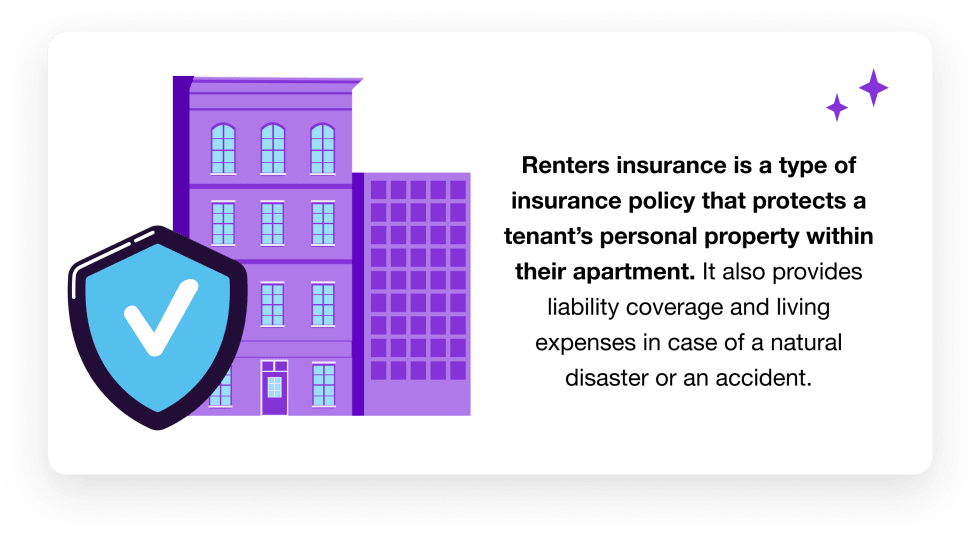
Many apartments require renters' insurance before move-in, which usually includes coverage for yourself and your property in the case of an unexpected event.
If that's the case, you will likely be asked to show proof of insurance on the day you sign your lease. Landlords often have an insurer that they work with or can recommend, or you can shop for one on your own.
If your full policy packet isn’t ready yet, you can use a temporary proof document.
6. Social Security Number
Landlords and property managers need a Social Security number to run a background or credit check.
If you don’t have one, you may still be able to apply using an ITIN, passport, or self-provided credit report, depending on the landlord’s process.
7. Credit Report
Your credit report offers valuable insights into your financial past. Your landlord may request a fee to run a background check and credit report, or you may be asked to supply your own.
You can pull your credit report for free from one of the three major credit bureaus.
8. Landlord References
Recommendations from previous landlords can go a long way in securing an apartment. Bring a list of prior residences and recommendations from your landlords whenever possible.
If you don’t have prior landlords, you can also provide contact information for your current property manager or lease ledger. If, for whatever reason, you don’t have a good relationship with your current landlord, you can also provide documentation showing you paid rent on time.
9. Personal References
If it's your first time renting or you live in a competitive rental market, personal references are helpful, as they can speak to your character and reliability.
These should be quality references, not a note from one of your buddies or your mom. Ask previous work colleagues, professors, supervisors, or mentors.
10. Additional Document Requests
Even with all the paperwork you gather, some landlords request additional documentation.
Here are some things to consider preparing:
- Canceled rent checks
- Copy of your Social Security card
- Past tax returns
- Savings statements
It's more common for landlords to request additional documentation in a hot rental market or in areas with high demand and low rental inventory.
11. Your Guarantor’s or Co-Signer’s Paperwork
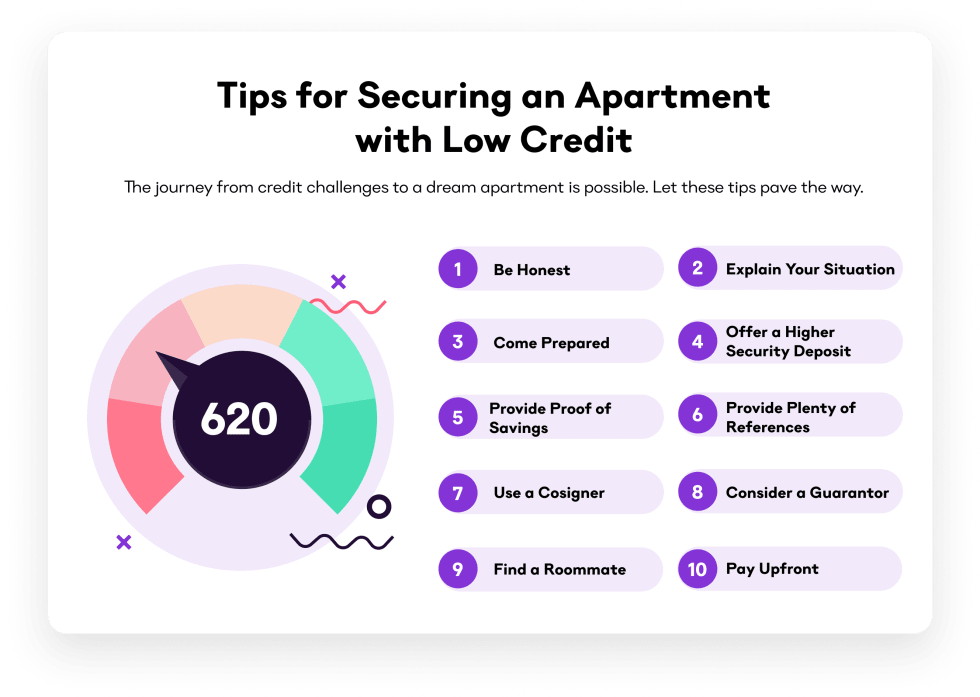
Having a lease guarantor or co-signer can be a big help if you don't earn enough to meet the landlord's requirements, have bad credit, or have been evicted.
Lease guarantors and co-signers promise to pay your rent if you can’t. Because they're also financially responsible, they will need them to provide the same paperwork as you.

What If Your Situation Isn’t Standard?
Self-Employed Renters
Bring more documentation than a W-2 employee would.
- 2 to 6 months of bank statements
- Recent tax return
- 1099s
- Client contracts or invoices
- CPA letter (if available)
Students and International Applicants
If you don’t have long U.S. credit or rental history, lean on identity and financial backup.
- Passport
- Visa or school enrollment docs if relevant
- Bank statements
- Sponsor or guarantor paperwork
- ITIN if available
First-Time Renters
If you’ve never rented before, you’ll likely need more documentation to prove your reliability.
- Strong proof of income
- Personal references
- A guarantor (if needed)
- Make sure you’re upfront about your lack of rental history.
Roommates
Each roommate will usually have to provide a full set of documents.
- Everyone should bring ID, proof of income, and screening info
- Ask whether the landlord qualifies you individually or jointly
- Clarify how rent responsibility works before signing
How to Protect Your Privacy When Sharing Documents
Sharing sensitive information can seem scary. But if you share only what the landlord needs to verify your application, and redact the rest properly, you’ll be good to go.
What to Black Out
- On bank statements or other similar records, it’s a good idea to redact:
- Full account number
- Routing number
- Debit or credit card numbers
- Login details
- PINs or security codes
- Unrelated transactions (if the landlord only needs income verification)
- Full address, in some cases, if city and state are enough
What Should You Redact from Your Bank Statements?
Redact sensitive account details, but leave enough visible to show your landlord deposits and balances.
You want the landlord to be able to confirm that money is coming in, without giving away more personal data than necessary.
Some things to leave visible:
- Your name
- Statement dates
- Deposit amounts
- Ending balance if requested
- What to redact:
- Full account number
- Routing number
- Card numbers
- Login details
- Unrelated transaction descriptions if not relevant
How to Redact Properly
Don’t just draw a black box over the text in your normal PDF editor, save, and send. Flatten the file after you’ve redacted it so the hidden text can’t be uncovered. Then export the redacted file as a new PDF before sending.
Secure Sharing Methods
- If possible, upload through a landlord’s secure portal
- Use password-protected PDFs if you have to email documents
- Avoid sending sensitive documents via text message
- Don’t hand over more than necessary
Can Landlords View Live Balances?
No. Landlords can only review the documents you provide. Since they can’t log into your account, they won’t be able to monitor balances live.
Find Your Next Apartment Today
Securing an apartment takes some preparation, but if you have all the required documents ready to go, you can make it less overwhelming.
Take Apartment List's easy quiz to get matches for your apartments in ideal locations with ideal amenities in your price range.
FAQs About Documents Needed to Rent an Apartment
What documents do I need to rent an apartment?
Most renters need proof of income, rental history, an ID, screening info, and references. The full 11-item checklist at the top covers the most common requests.
What is a good credit score to rent an apartment?
Typically, renters need a credit score of at least 600 to 650 to qualify for an apartment. The average credit score for renters also varies based on location and building type.
Why do landlords ask for bank statements?
They use them to verify income, deposits, and overall financial stability when an applicant doesn’t have pay stubs.
Can landlords check your bank balance?
No, generally, landlords can’t directly check your bank balance. While they can request bank statements to verify income and financial stability, they don't have the legal authority to access your account information in real-time.
How long does it take to get approved for an apartment?
You may get approved within 24 to 72 hours if your file is complete. More complicated applications can take closer to a week
What if I've never rented before?
You can still apply. Focus on proving you have enough income, and provide a solid ID, personal references, and a guarantor if needed.
Can I rent an apartment without an SSN?
Sometimes, yes. Ask whether the landlord accepts an ITIN, passport, manual screening, or a self-provided credit report.
What if I’m applying with a roommate?
Usually, each roommate needs to submit a full set of documents. Ask whether the landlord qualifies you jointly or separately.