$1,955
3820 S River Pkwy, Portland, OR 97239(724) 401-4913Rent Savings
- 51 units available
- 1 bed • 2 bed • 3 bed
- Amenities
In unit laundry, Wine room, Patio / balcony, Granite counters, Dishwasher, Pet friendly + more
Verified listing
Verified

Portland's safest neighborhoods for renters in 2025 are Multnomah Village, Westmoreland, Lents, Overlook, Nob Hill, and Kerns. Renters living in Portland often prioritize safety, as there are many less safe areas to move to. It’s essential to choose a neighborhood with low crime rates and stable rent prices.
From family-friendly pockets to hip, urban scenes with community-minded residents, these are the safest places to live in 2025, according to 2025 rent data. Below, you’ll find a data-backed look at each neighborhood, including Portland rent prices, safety rankings, and what it’s really like to live there.
Note: We used internal Apartment List inventory data and cross-referenced with neighborhood data from Rent.com and Zumper to give you the most accurate snapshot of rents across Portland as of October 2025. Crime data comes from CrimeGrade.com and the Portland Police Department.
Portland is not considered a safe city for renters in 2025. Portland ranks in the 14th percentile for safety, meaning it is safer than only 14% of cities in the U.S. This also means that 86% of cities are considered safer than Portland.
That said, Portland's crime landscape is changing. Total violent crime increased 3% year-to-date (January 2024 - August 2024 vs. January 2025 - August 2025), and non-violent crime fell 3.54% year-to-date during that same time frame. While overall violent crime is slightly higher, homicide rates are down 50% from 2024 to 2025. Portland has an overall D- crime grade according to CrimeGrade.org.
Location within the city significantly impacts crime rates. Data from Crime Grade shows that those in northern neighborhoods have a 1 in 15 chance of being a victim of crime, while those in the southeast only have a 1 in 51 chance.
Portland's government invests a significant amount of money in its Crime Reduction Plan, which aims to reduce incidents in neighborhoods, particularly in high-crime areas.
Crime Index: A composite score (0–100) indicating how a city’s total crime compares to the national average; lower scores = safer.
Portland’s crime rate trends suggest that even with its elevated crime challenges, major crimes such as homicides still have room to decrease even further, and indicate the effectiveness of Portland’s Crime Reduction Plan.
| Crime Type | Rate per 1,000 |
|---|---|
| Assault | 1.892 |
| Robbery | 0.6589 |
| Rape | 0.7367 |
| Murder | 0.0539 |
| Total Violent Crime | 3.342 |
| Theft | 17.49 |
| Motor Vehicle Theft | 5.907 |
| Burglary | 3.649 |
| Arson | 0.2709 |
| Total Property Crime | 27.32 |
| Other Crime Rates | Rates per 1,000 |
|---|---|
| Kidnapping | 0.1318 |
| Drug Crimes | 1.606 |
| Vandalism | 10.04 |
| Identity Theft | 1.220 |
| Animal Cruelty | 0.0755 |
| Total Other Crime | 13.07 |
Theft and vandalism are major drivers of crime in Portland, accounting for 27.53 incidents per 1,000 people of the 40.39 per 1,000 recorded incidents.
With Portland scoring an overall crime grade average of D-, there are many neighborhoods renters will likely want to avoid. Most renters prioritize security, and using crime statistics can help identify neighborhoods that outperform or are in line with citywide averages on both violent and property crime rates.
Multnomah Village has a crime rate of 26.374 per 1,000 residents, compared to Portland’s 30.662, making it a safer choice in Portland. Residents enjoy the mix of urban and suburban the area offers, and families in particular appreciate the B rating for public schools and an A- family rating from Niche.com. To round it out and make it appealing to all, it also has an A for nightlife and a B+ for diversity.
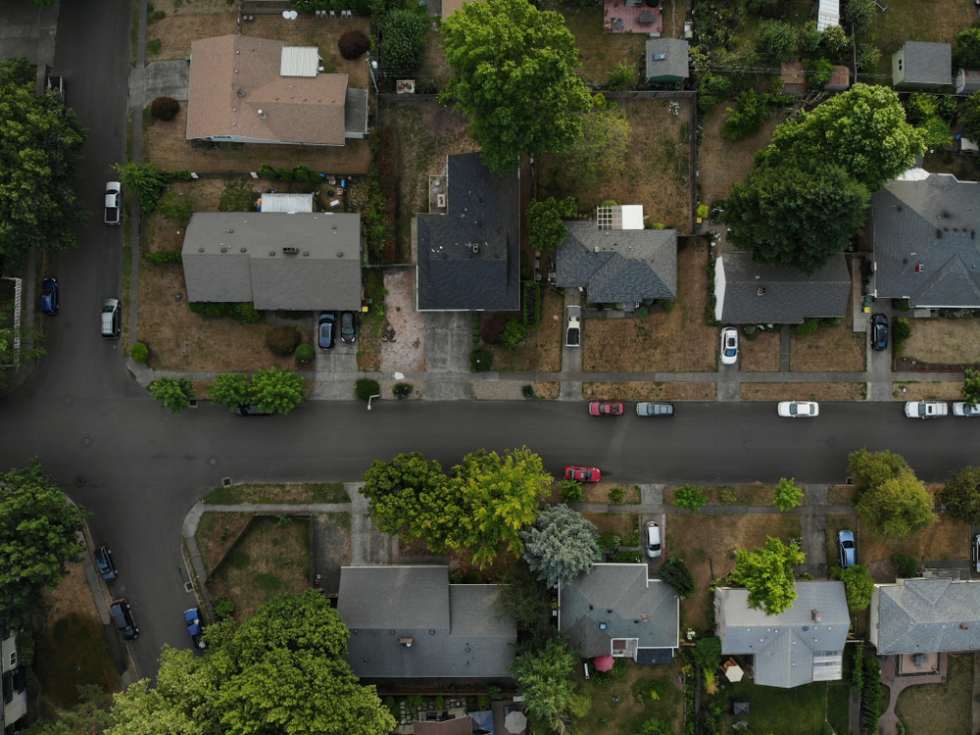
To help renters find the safest neighborhoods in Portland in 2025, we examined crime data and compared it to local rent prices and population data. Using this approach, we can accurately target relevant, renter-focused features and criteria.
The violent and property crime rates in each neighborhood were benchmarked against citywide and national averages. We focused on low crime per capita, rather than just raw totals, to reflect safety for day-to-day living. From there, we looked at 2025 rent data to highlight areas that offer affordability and security.
We also considered school ratings, walkability, and access to amenities, which are important to many renters. Whether you're relocating with your family or moving for work, our list is designed to help you discover the safest places to live in Portland, backed by statistics.
We built rankings using multiple data sources to cover the most recent crime and rent trends in Portland:
Each neighborhood was evaluated with the following factor weightings:
Each neighborhood on this list received the best scores compared to the overall neighborhoods in Portland.
Crime-to-rent ratio: the number of reported crimes per $1,000 of average annual rent. A lower ratio means you're getting more safety for every dollar you spend on housing.
For example, if a neighborhood reports 200 crimes per year and the median rent is $1,890 per month ($22,680 annually), the crime-to-rent ratio would be 8.82 crimes per $1,000 of rent.
Using this metric, we can help you find neighborhoods that prioritize both budget and safety. Instead of
This metric is especially helpful for cost-conscious renters. Instead of just chasing the lowest price or safest ZIP code, the ratio lets you weigh both factors together, showing which neighborhoods offer the best value in terms of both affordability and peace of mind.
Those looking for a place to call home in Portland can look to these six neighborhoods, which offer the best mix of budget-conscious pricing, low crime rates, and community-minded areas. Our picks are backed by 2025 data on violent and property crime, rent prices, and the city’s initiatives.
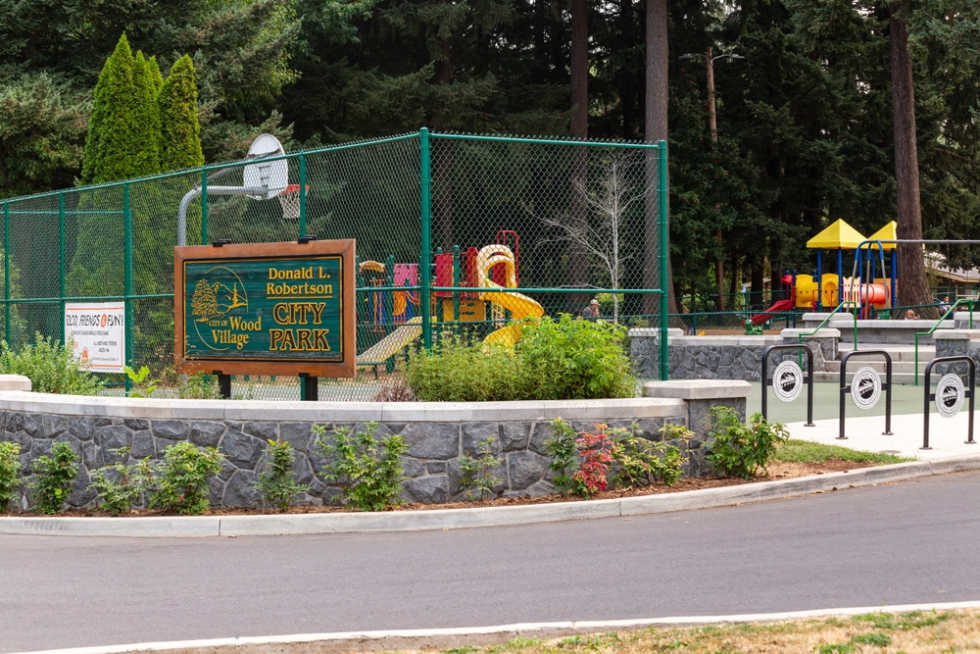
Multnomah Village offers renters a city-centric neighborhood with some small-town charm, characterized by its quiet streets, coffee shops, and friendly community. The area attracts those seeking walkability and safety, away from Portland’s busier core, while still offering convenient access to major roads and parks. It has the kind of charm that appeals to renters who prefer local character over nightlife.
The neighborhood’s overall crime grade is a D+, with an average of 3.114 violent crime incidents per 1,000 residents and 23.26 property crime incidents per 1,000. The average one-bedroom rent is approximately $1,210 per month, making it one of the more affordable areas on this list. Its crime-to-rent ratio of 1.82 indicates that renters receive relatively good value for their dollar compared to inner-city neighborhoods.

Westmoreland is a residential area that feels peaceful without being isolated. It’s popular among renters who want access to local parks, good walkability, and a strong sense of community. Classic homes and a friendly, slower pace make it a top choice for those who want to stay close to downtown while maintaining a suburban lifestyle.
With a C- overall grade, Westmoreland sees about 4.006 violent crimes and 28.51 property crimes per 1,000 residents. Rents average around $1,550 for a one-bedroom, with a low crime-to-rent ratio of 1.75. It’s one of the best balances between safety and affordability in this group, offering steady value for renters who prioritize calm surroundings.

Lents has long been one of Portland’s most diverse and affordable neighborhoods. It’s undergoing steady revitalization, with a growing number of shops and restaurants. Renters are drawn by lower prices, bigger yards, and community-focused neighbors, making it appealing for those willing to trade a central location for more space and affordability.
The area’s overall grade is a D, with a violent crime rate of 4.021 per 1,000 people and a property crime rate of 38.66 per 1,000. One-bedroom apartments rent for around $1,450 per month, and its 2.45 crime-to-rent ratio shows slightly higher risk compared with quieter neighborhoods. Still, the cost savings continue to attract long-term residents and first-time renters.

Overlook lives up to its name with great views and easy access to the MAX line, making it convenient for commuters and renters who enjoy city access without being in the center of downtown. Its mix of older homes, bike paths, and open spaces gives it a balanced urban-residential feel, and the neighborhood’s active community groups maintain a strong local identity.
With an overall D- grade, Overlook records 5.368 violent crimes and 51.59 property crimes per 1,000 residents. The average one-bedroom rent is approximately $1,424 per month, resulting in a crime-to-rent ratio of 3.33. While crime rates are higher than in outer neighborhoods, renters often value the convenience, views, and proximity to Portland’s core enough to justify the higher cost.

Nob Hill, also known as the Alphabet District, is one of Portland’s most walkable and desirable neighborhoods. The streets are lined with historic homes, boutique shops, and some of the city’s best dining spots. Renters who prioritize charm and accessibility over quiet will find this area particularly appealing, as it’s full of character and urban life.
The neighborhood’s overall grade is an F, reflecting higher crime levels despite its popularity. Violent crime averages 10.85 per 1,000 residents, and property crime reaches 78.38 per 1,000. The average rent for a one-bedroom apartment is approximately $1,462 per month, resulting in a 5.09 crime-to-rent ratio—among the highest in this area. Renters choose Nob Hill for lifestyle and convenience, fully aware of the trade-off in security.

Kerns is situated on Portland’s east side, with a mix of residential living and a lively commercial scene. It’s a favorite for renters who want to be close to restaurants, nightlife, and downtown without losing the feel of a neighborhood. Its mix of classic homes and modern apartments keeps it popular among young professionals who thrive in walkable areas.
Kerns carries an overall grade of F, with 10.05 violent crimes and 80.89 property crimes per 1,000 residents. The average one-bedroom rent is approximately $1,465 per month, resulting in a crime-to-rent ratio of 5.17, the highest on this list. Despite the elevated numbers, its central location and amenities keep demand high among renters willing to trade some safety for convenience.
| Overall Crime Score | Average One-Bedroom Rent | Commute to Downtown Portland | |
|---|---|---|---|
| Multnomah Village | Below Average | $1,210 | 15 minutes |
| Westmoreland | Average | $1,550 | 20 minutes |
| Lents | Below Average | $1,450 | 25 minutes |
| Overlook | Below Average | $1,424 | 12 minutes |
| Nob Hill | Below Average | $1,462 | 10 minutes |
| Kerns | Below Average | $1,465 | 15 minutes |
Rent prices vary significantly across Portland's safest neighborhoods. As of 2025, Westmoreland has the highest average rent for one-bedroom apartments, at approximately $1,550 per month, while Multnomah Village offers more affordable options at $1,210 per month. That’s a savings of roughly $340 per month, or over $4,000 yearly, between two neighborhoods that offer security.
Higher rents in Portland don’t always mean a safer community. For example, Kerns and Nob Hill both have one-bedroom apartments with rent prices around $1,460, but have higher property crime rates than both Westmorland and Multnomah Village.
We calculated Portland commute times (2025) from each ranked neighborhood to three major job and travel hubs. Car times reflect typical weekday traffic (8–9:30 a.m.), and public transit estimates use TriMet route data.
From Multnomah Village:
From Westmoreland:
From Lents:
From Overlook:
From Nob Hill:
From Kerns:
Safety ratings aren’t the only factor to consider when shopping for your next rental unit. Some renters may prioritize walkability, while others are more interested in nearby nightlife or access to urban amenities. Here’s how to balance safety with your daily routine, without sacrificing convenience or cost.
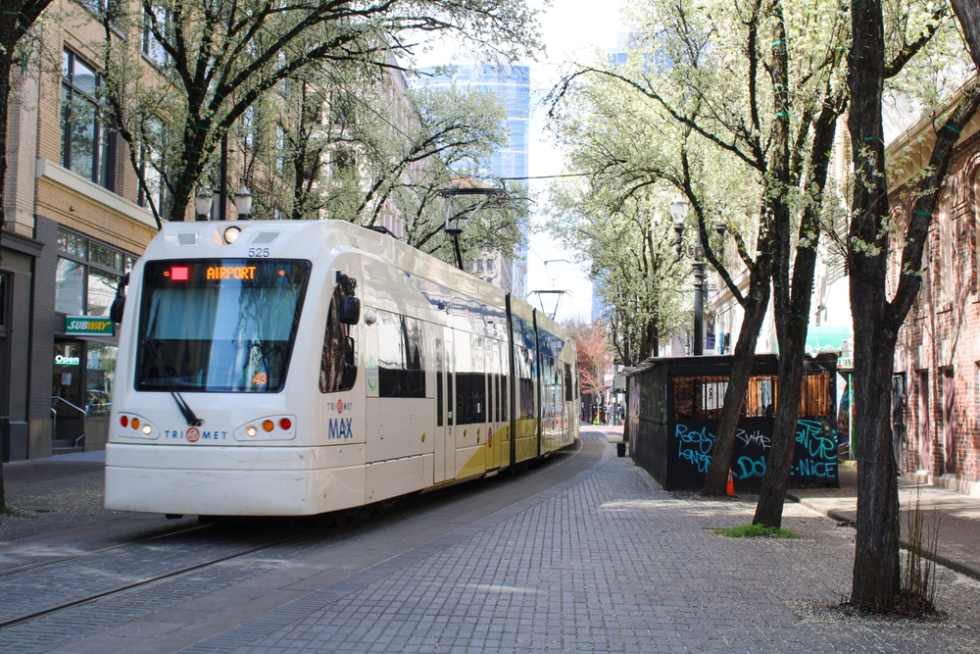
If you rely on TriMet or prefer to bike and walk instead of drive, several neighborhoods combine good safety data with strong transit connections:
Multnomah Village (Walk Score: 74)
Kerns (Walk Score: 94)
Overlook (Walk Score: 74)
Portland has many neighborhoods that are improving in terms of both safety and quality of life.
While neighborhoods have an overall safety rating, you should check crime data for the exact address and block-by-block for nearby streets.
Here’s how to vet a block:
Checking out any new potential neighborhoods can protect you from any surprises or compromised security.
Apartment List offers an AI-powered quiz that takes less than 90 seconds, utilizing your preferences —such as commute needs, price range, and safety concerns. Each match suits your lifestyle and needs. It’s built to help you skip the scrolling and start leasing smarter.
Take the quiz and see your matches today. With us, you’ll spend five minutes and save 50 hours searching.
Multnomah Village has the lowest average rent for a one-bedroom apartment, at $1,210 per month, and Overlook has an average rent for one-bedroom apartments at $1,424. As of September 2025, Portland's average rental price for a one-bedroom apartment is $1,794.
All crime data is based on reports from January 2024 to August 2025, sourced from the Portland Police Department (HPD), Crime Grade, and the FBI’s NIBRS program.
Portland Police Reported Crime Data, PortlandMaps, and the Citizen app allow residents to follow crime incidents, making them ideal for tracking safety.
Nob Hill and Overlook have the shortest commute times to Downtown Portland, both at around 7 or 8 minutes by car.
Renters should ask landlords to invest in motion-sensor lighting, video doorbells, and smart locks to prevent break-ins.

In unit laundry, Wine room, Patio / balcony, Granite counters, Dishwasher, Pet friendly + more
In unit laundry, Patio / balcony, Dishwasher, Pet friendly, Garage, Stainless steel + more