$3,850
5201 Kinnabeck Lane, Columbus, OH 43220(380) 205-0733Rent Savings
- 4 units available
- 4 bed
- Amenities
In unit laundry, Patio / balcony, Pet friendly, 24hr maintenance, Garage, Stainless steel + more
Verified listing
Verified
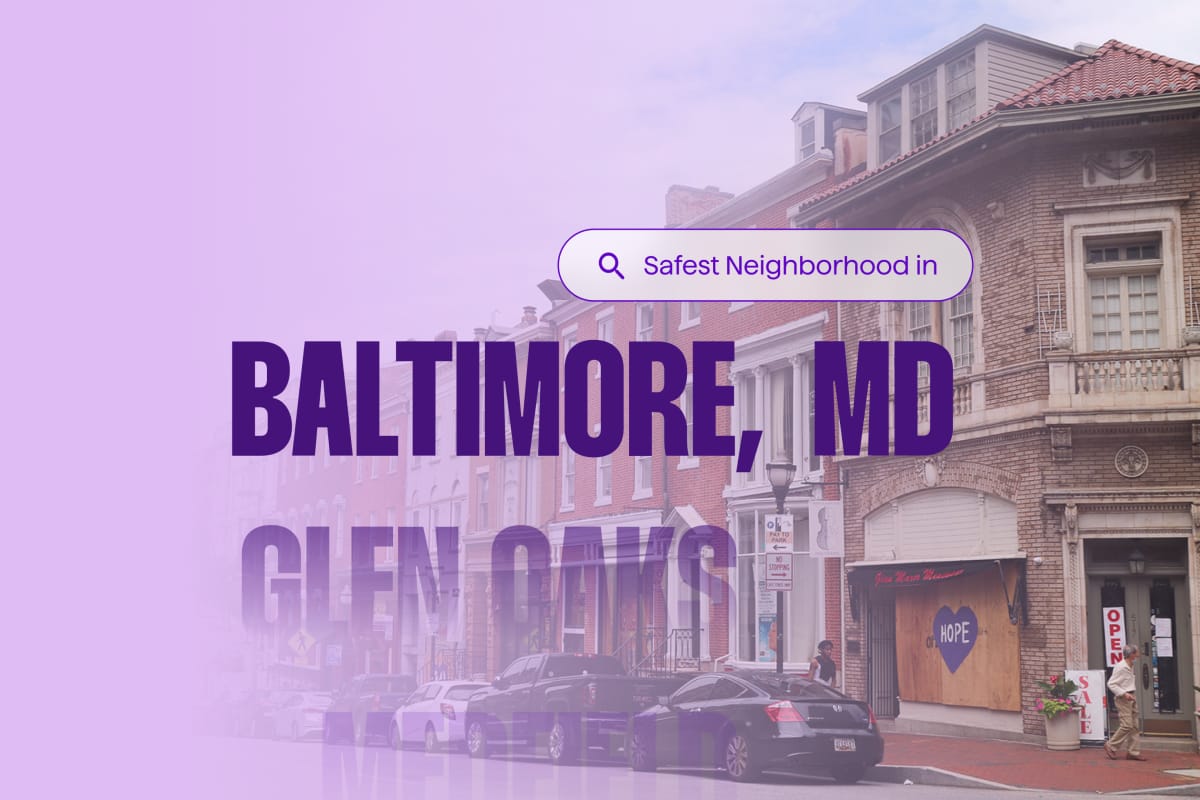
Baltimore has many safe neighborhoods for renters in 2026, and this guide spotlights six of the best, including Hampden, Locust Point, and Frankford. With safety top of mind for many Baltimore renters, it’s more important than ever to understand where crime rates are falling, rent prices are stable, and day-to-day life feels secure.
From the family-friendly streets of Roland Park to the culture-rich blocks of Riverside, these are the safest places to live in Baltimore, according to 2026 crime rate data. Below, you’ll find a data-backed look at each neighborhood, including Baltimore rent prices, safety rankings, and what it’s really like to live there.
Overall, Baltimore is getting safer for renters. In 2024, the city saw a 23% decrease in homicides and a 34% decline in non-fatal shootings. As of October 8, 2025, homicides have continued to drop by 30.3% and nonfatal shootings by 21.4%, on top of the reductions experienced in 2024.
Despite the progress, the city still carries a D crime grade and is ranked in the 22nd percentile for safety, meaning it’s safer than 22% of cities but less safe than 78%. Your chance of being a victim of crime varies by neighborhood, from about 1 in 18 in central Baltimore to 1 in 36 in the northeast.
CrimeGrade.org data shows Baltimore’s combined crime rate, 36.63 incidents per 1,000 residents, sits above the Maryland average. Residents generally view the northeast as the safest part of the city.
When looking at total incidents, central Baltimore sees about 18,584 crimes per year, while the north reports closer to 8,464. Still, citywide stats can be misleading, as local safety varies widely. That’s why looking at neighborhood‑level data is essential for renters searching for the safest places to live in Baltimore.
Crime Index: A composite score (0–100) indicating how a city’s total crime compares to the national average; lower scores = safer.
These trends suggest that while challenges remain, the city’s coordinated safety strategies are showing results, especially in neighborhoods investing in public safety and community partnerships.
| Crime Type | Rate per 1,000 |
|---|---|
| Assault | 3.099 |
| Robbery | 1.286 |
| Rape | 0.5804 |
| Murder | 0.0583 |
| Total Violent Crime | 5.024 |
| Burglary | 1.959 |
| Theft | 13.98 |
| Motor Vehicle Theft | 4.223 |
| Arson | 0.0771 |
| Total Property Crime | 20.24 |
Theft drives most of the overall crime increase, accounting for 13.98 incidents per 1,000 people.
Renters who prioritize safety can find real peace of mind in neighborhoods that outperform citywide averages for both violent and property crime.
Roland Park has a crime rate of 30.94 per 1,000 residents, compared to Baltimore’s 36.63, making it much safer overall. Its community-driven atmosphere, large parks, and proximity to some of the city’s top schools make it a clear standout.
Riverside, a family-friendly urban area, has a combined crime rate of just 31.27 per 1,000 people, making it safer than 61% of neighborhoods in the U.S. The southwest section tends to be the most secure, while the eastern edge reports higher activity.
To determine the safest neighborhoods in Baltimore for renters in 2025, we analyzed fresh crime statistics alongside local rent prices and population data. Our approach emphasized accuracy, relevance, and renter-focused criteria.
Each neighborhood’s violent and property crime rates were benchmarked against citywide and national averages. We prioritized low crime per capita, not just raw totals, to reflect real safety for day-to-day living. From there, we cross-referenced 2025 rent data to highlight areas that offer both peace of mind and price accessibility.
Finally, we considered walkability, school ratings, and access to amenities, rounding out each selection with quality-of-life indicators that matter to renters. Whether you're relocating solo or with family, our list is designed to surface the safest places to live in Baltimore, backed by numbers, not guesswork.
Our rankings are built from a multi-source dataset covering the most recent crime and rent trends in Baltimore:
Each neighborhood was evaluated with the following factor weightings:
Factor Weights
Each neighborhood on this list received the best scores compared to the overall neighborhoods in Baltimore.
Crime-to-rent ratio is the number of reported crimes per $1,000 of median annual rent. A lower ratio means you're getting more safety for every dollar you spend on housing.
For example, if a neighborhood reports 200 crimes per year and the median rent is $1,480 per month ($17,760 annually), the crime-to-rent ratio would be 11.26 crimes per $1,000 of rent.
This metric is especially helpful for cost-conscious renters. Instead of just chasing the lowest price or safest ZIP code, the ratio lets you weigh both factors together, showing which neighborhoods offer the best value in terms of both affordability and peace of mind.
Looking for a secure place to call home in Baltimore? These six neighborhoods offer the best mix of low crime rates, renter-friendly pricing, and community-driven lifestyles, backed by comprehensive 2025 data on violent and property crime, rent prices, and safety initiatives.
Note: crime-to-rent ratios are rough estimates: (violent + property crime rate) ÷ (annual rent in $1,000s). These ratios help compare relative safety per cost, not absolute safety.
Walkable with urban charm
Hampden, often called Baltimore’s “hipster haven,” delivers on personality. Once a mill town, it’s packed with indie energy: murals, record shops, galleries, and dive bars that feel like extensions of your living room. The Avenue (36th Street) anchors it all, offering everything from artisan donuts to vintage furniture and locally roasted coffee.
With its strong walkability (Walk Score 85) and easy bus access (Line 94 hits downtown in around 14 minutes), Hampden gives you urban access without downtown chaos. It’s not spotless—crime happens—but there’s a fierce sense of pride here. Locals look out for each other, and that community vibe gives the neighborhood a tight-knit, lived-in feel that newcomers quickly fall for.
Residential vibes, strong community
Roland Park feels more like a quiet garden suburb than a city neighborhood, but that’s part of its charm. Designed over a century ago to preserve green space, it’s full of tree tunnels, historic homes, and calm, walkable streets that make coming home feel like a deep breath.
It’s a favorite among families and professionals who want city access without the noise or density. Safety scores are solid, and the local associations here are active—hosting events, managing community gardens, and making sure everyone knows their neighbors. Public transit is limited, but if you’re okay driving or biking a bit, the peace, safety, and greenery make it well worth the tradeoff.
Lively neighborhood with waterfront views
Once an industrial port area, Locust Point blends industrial history with modern waterfront living, with charming rowhomes and harborfront condos just steps from scenic promenades. You’ll find locals walking dogs at Fort McHenry, grabbing crab cakes by the water, or commuting to downtown in minutes.
It’s ideal for professionals who want proximity to both work and weekend fun. You can ditch the car most days—everything from groceries to bars is within walking distance—and still get unbeatable harbor views. Property crime exists (as it does citywide), but overall, Locust Point’s energy, convenience, and views make it one of Baltimore’s standout neighborhoods.
Modern conveniences with a historic feel
Canton is one of Baltimore’s more desirable waterfront neighborhoods. Once an industrial area, it’s now a mix of renovated rowhomes, luxury apartments, and some of the city’s best nightlife. Its cobblestone streets and harborfront promenade lend plenty of charm, while restaurants and bars keep the social scene thriving.
Rents may be higher, and crowds tend to pack the square on weekends, but you get walkable convenience, harbor views, and easy access to downtown and major employers. Crime can be hit or miss, mostly property-related, but for renters looking for energy and accessibility, Canton checks almost every box.
Centrally located culture hub
Riverside sits just south of Federal Hill in South Baltimore, anchored by the 17-acre Leone-Riverside Park which overlooks the Patapsco River. The neighborhood mixes well-maintained rowhouses, modern apartments, and encouraging street life. It’s one of Baltimore’s more walkable, transit-accessible neighborhoods, making it easy to navigate without a car.
For the culture lovers, Riverside is close to the Baltimore Museum of Industry, Federal Hill Park, and a variety of dining and nightlife options. The blend of greenspace, river views, and urban access makes it a strong safety and lifestyle pick.
Residential vibes and affordable rents
Set in northeast Baltimore, Frankford is largely residential with older single-family homes and multifamily conversions that keep rents below the city median. The northern blocks are notably quieter, while the southeast corridor sees more variability in safety.
Ongoing street-lighting upgrades and neighborhood watch programs have started improving conditions, making Frankford appealing for renters balancing budget and space. It’s practical, commuter-accessible, and offers one of the city’s better price-to-safety trade-offs.
| Neighborhood | Overall Crime Score | Average One-Bedroom Rent | Commute to downtown |
|---|---|---|---|
| Hampden | Average | $1,300 | ~10-20 min by car |
| Roland Park | Above Average | $1,200 | ~20-30 min by car |
| Locust Point | Average | $1,750 | ~5-10 min by car |
| Canton | Average | $1,612 | ~10 min by car |
| Riverside | Above Average | $1,925 | ~10 min by car |
| Frankford | Average | $1,197 | ~20-25 min by car |
Among the safest Baltimore neighborhoods, rent varies, with monthly prices in Roland Park averaging $1,200 for a one-bedroom apartment, while Riverside hovers at $1,925 for a similar apartment. That’s a difference of over $725 per month for areas that both rank well on safety and amenities.
Even so, higher rent doesn’t always correlate with lower crime. In Canton, where average rents for a one-bedroom sit at $1,612, the crime rate is 43.26 per 1,000 residents. In Hampden, where average one-bedroom rents are at $1,300, the crime rate is 37.75 per 1,000 residents.
We calculated Baltimore commute times (2026) from each ranked neighborhood to two major job hubs: Downtown Baltimore and Washington, D.C.
Car times reflect typical weekday traffic (8-9:30am). Bus and Metro estimates use official route data.
From Hampden
From Roland Park
From Locust Point
From Canton
From Riverside
From Frankford
Safety isn’t one-size-fits-all. Some renters want quiet, suburban streets, while others need nightlife, walkability, or studio access. Here’s how to balance safety with your daily routine, without sacrificing convenience or cost.
If you're car-free but still want peace of mind, these neighborhoods offer strong safety scores and public transit access:
You don’t need to live in a super high-end neighborhood or way out in ‘nowheresville’ to feel safe. Several rising neighborhoods are showing strong safety improvements, and still offer reasonable rents:
Key indicators include:
Not all streets are created equal. Even in “safe” neighborhoods, your exact address matters. Here’s how to vet a block before committing:
Doing your homework upfront helps you avoid surprises and gives you real confidence in your new place.
Apartment List’s AI-powered quiz takes less than 90 seconds and uses your preferences—like commute needs, price range, and safety concerns—to serve up personalized, secure listings that fit your lifestyle. It’s built to help you skip the scrolling and start renting smarter.
Take the quiz and see your matches today. With us, you’ll spend five minutes and save 50 hours searching.
Prefer to DIY it? We’ve got you covered there, too. Once you’ve found your place in Baltimore, we offer tons of resources to get you ready for your move. Check out our Baltimore Cost of Living Guide, budgeting guide, and Rent Calculator.
Frankford offers the lowest average rent for a one-bedroom apartment on our list, at $1,197 monthly. Not too far behind is Hampden at $1,300 per month. Both neighborhoods show relatively low violent and property crime rates, with more budget-friendly options than areas like Riverside or Locust Point.
Of our findings, Roland Park is the safest Baltimore neighborhood for renters, with a violent crime rate of 5.215 per 1,000 residents and a total crime rate of 30.94. The neighborhood combines urban convenience with picturesque streets, and is a desirable area for families who want to be near top-rated schools.
All crime data is based on reports from the Baltimore Police Department, news & updates from the office of Mayor Brandon M. Scott, and CrimeGrade.org.
Yes. Nighttime typically sees increased property crime, loitering, or vandalism. In neighborhoods like Hampden, Locust Point, and Canton, well-lit, walkable streets tend to maintain safer conditions after dark—though caution is always advised, especially on less busy blocks.
Enter the address in the search tab of the Baltimore Police Department Public Crime Map, ask neighbors or neighborhood groups about recent activity, or scope out the neighborhood at night to evaluate lighting and traffic patterns.
Look for smart locks, video doorbells, and motion-sensor lighting—they deter break-ins and may help you qualify for lower renters insurance rates.

In unit laundry, Patio / balcony, Pet friendly, 24hr maintenance, Garage, Stainless steel + more
In unit laundry, Patio / balcony, Pet friendly, Stainless steel, Walk in closets, Gym + more