$3,850
5201 Kinnabeck Lane, Columbus, OH 43220(380) 205-0733Rent Savings
- 4 units available
- 4 bed
- Amenities
In unit laundry, Patio / balcony, Pet friendly, 24hr maintenance, Garage, Stainless steel + more
Verified listing
Verified

Are you considering moving to Savannah but need to figure out what the cost of living is like? We did all the research for you so your decision would be easy.
Thinking about moving to Savannah? Good news, living in this charming Southern city costs 9.8% less than the national average.
With mild winters and quick access to beaches, Savannah draws college students, young professionals, and retirees alike. Median rents are still comparatively friendly for a coastal city—roughly around $1,201 for a one-bedroom and $1,403 for a two-bedroom—and the population sits under 150,000, which keeps the city feeling manageable.
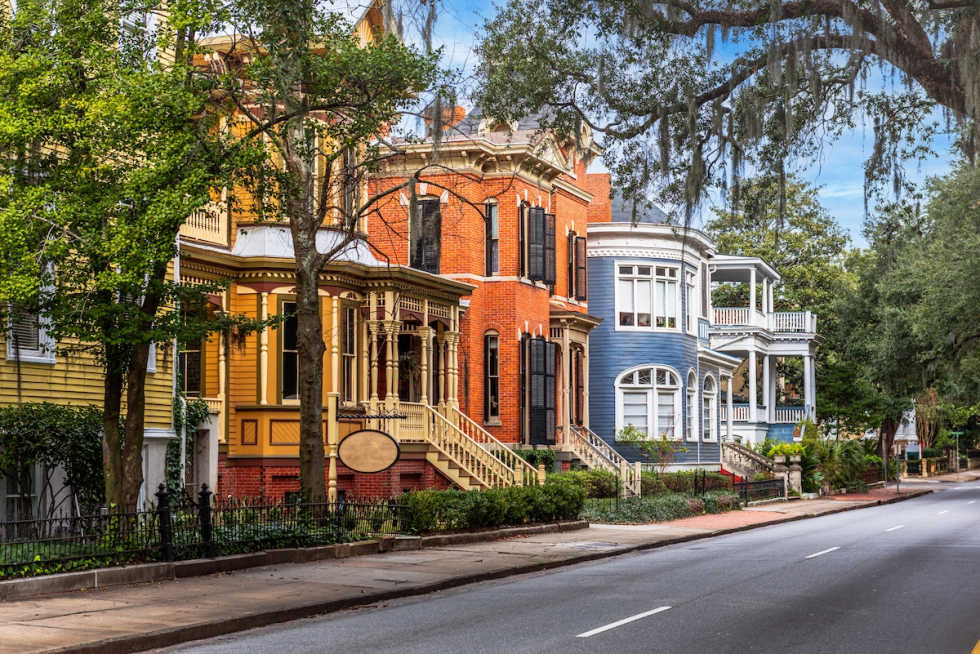
A city steeped in history and Southern charm, Savannah was America’s first planned city, blending cobblestone squares, moss-draped oaks, and a riverfront downtown that’s on the National Register of Historic Places. Economically, Savannah’s major industries include advanced manufacturing, aerospace, entertainment production, health tech, and creative services, all buoyed by the busy port and regional logistics. Day-to-day life is car-leaning (walk score: 44; bike score: 52), but the compact historic core is very walkable and lively.
If you’re weighing the cost of living, Savannah tends to come in lower than nearby coastal hubs like Charleston, South Carolina, and is often easier on the housing budget than larger metros such as Atlanta, all while delivering serious charm and a growing job base.
Before you make the move south, have a read of our guide where we’ve done the legwork for you and dove into all of the details to break down the cost of living there so you can plan your move to Savannah with ease.
The cost of living in Savannah is 9.8% lower than the rest of the United States. On average, it is a great option for renters looking for an affordable metro area as compared to nearby Charleston and sister city Atlanta. Let's see how that breaks down by spending category.

| Category | Savannah | Georgia | United States |
|---|---|---|---|
| Overall | 90.2 | 94.5 | 100.0 |
| Grocery | 96.9 | 95.5 | 100.0 |
| Health | 95.8 | 99.8 | 100.0 |
| Housing | 72.4 | 82.4 | 100.0 |
| Median Home Cost | $260,000 | $308,200 | $338,100 |
| Utilities | 103.2 | 103.2 | 100.0 |
| Transportation | 89.2 | 105.1 | 100.0 |
| Miscellaneous | 102.8 | 83.8 | 100.0 |
When compared to Atlanta, Savannah is significantly more affordable, especially for housing. However, Atlanta, being a major metropolitan area in the U.S., offers bigger-city amenities and job opportunities that may offset the higher costs for some people. Here’s how they compare against each other.
| Category | Savannah | Atlanta | United States |
|---|---|---|---|
| Overall Index | 90.2 | 113.3 | 100.0 |
| Grocery | 96.9 | 98.8 | 100.0 |
| Health | 95.8 | 98.8 | 100.0 |
| Housing | 72.4 | 114.6 | 100.0 |
| Median Home Cost | $260,000 | $364,300 | $338,100 |
| Utilities | 103.2 | 103.6 | 100.0 |
Rent prices in Savannah are approximately 14.3% below the national average, with a housing mix of historic downtown apartments, student housing, suburban complexes, and luxury waterfront rentals. The latest Apartment List data shows that the median rental price of $1,432 remained flat month-over-month and down 1.6% year over year.
| Location | Overall Avg. Rent | One-Bedroom (vs. National) | Two-Bedroom (vs. National) |
|---|---|---|---|
| National | $2,102 | $1,757 | $2,194 |
| Savannah | $1,801 (-14.3%) | $1,721 (-2.0%) | $1,994 (-9.1%) |
To rent a one-bedroom apartment in Savannah, you'll spend an average of $1,721 a month. This figure reflects a national trend of rents slightly declining.
If you’re looking for a bit more space as a family or sharing with a roommate, a two-bedroom apartment costs about $1,994 a month.
Savannah’s rent growth over the past year has been similar to both the state (-0.4%) and national (-0.9%) averages. If you're planning to expand your search to cities near Savannah, here's what the average rents are to help plan your budget.
| Location | Average Rent | One-Bedroom | Two-Bedroom |
|---|---|---|---|
| National | $2,102 | $1,757 | $2,194 |
| Savannah | $1,801 | $1,721 | $1,994 |
| Atlanta | $2,062 | $1,806 | $2,310 |
| Charleston | $2,563 | $2,283 | $2,941 |
If it's your first time renting or if you don't have a high credit score, consider no-credit-check apartments. If you're unsure where you'll be, consider a month-to-month apartment before making a 12-month commitment. And should you prefer to rent from an owner rather than a property manager, consider an apartment for rent by an owner.
In Savannah, a typical home costs $260,000, which is 23.1% less than the national average of $338,100 and 15.6% less than the average Georgia home price of $308,200.
Savannah’s price-to-rent ratio for 2025 is 14.9, which is favorable to homeownership if you are planning to stay for at least five years. Beyond the monthly mortgage, other expenses such as property taxes and insurance should be considered for a more accurate comparison.
Savannah may be less expensive than Charleston, but rents in some neighborhoods are still pricey. The most expensive neighborhood is Yamacraw Village, where the average rent for a one-bedroom apartment is $3,040.
Savannah isn't the most affordable area of Georgia, but there are relatively cheap neighborhoods to choose from. Look to Lundhurst-Rivers End, where the average one-bedroom apartment rent goes for $935 a month.
While the cost of living is 9.8% below the national average, it’s still advisable to use the 30% rule to help you budget realistically about your monthly rent and expenses.
While overall rents in Savannah are lower than in many states in the country, expenses like groceries and utilities run closer to the national average. Another way to determine an adequate salary is to use the MIT Living Wage Calculator.
MIT estimates that a single adult with no children would need to earn a living wage of $24.06 in Savannah. Two working adults with a child would each need to earn $23.88 an hour.
However, these aren’t necessarily the numbers you should aim for to comfortably live in Savannah, as the living wage is defined as the minimum amount of money needed to live above the poverty threshold. It excludes expenses for restaurants, entertainment, and vacations. It also doesn't allow for savings.
You can also test your numbers against the Apartment List rent calculator for a quick gut check.
Utilities will take up a noticeable portion of your income when you live in Savannah. Utilities cost 3.2% more than the national average, summers are hot and humid, and you should account for higher energy costs during peak summer months. According to Numbeo, renters in Savannah spend on average $222.73 per month. If you add internet (60 Mbps or more with unlimited data), you'll pay another $83.60, which raises the monthly utilities bill to $306.33.
As a car-reliant hub, the cost of transportation in Savannah includes car payments, gas, car insurance, maintenance, and public transportation.
For a single adult without children, the MIT Living Wage Calculator estimates the cost of transportation to be $10,320 per year, which is higher than in similar-sized cities. For a family of two working adults and two children, the average annual cost jumps to $17,311.
Public transportation in Savannah is a mix of niche services, such as:
Grocery prices in Savannah are slightly below the national average. MIT estimates that a single adult without children will spend around $4,386 a year on groceries. Grocery costs can rise significantly for families. A family of four with two working adults and two children will spend an average of $12,168 per year.
According to Numbeo, here are some examples of food costs:
Dining out in Savannah, you can expect to pay around $20 per person for a meal at an inexpensive restaurant and $60 for a three-course meal for two before tip.

A single adult without children will pay around $3,180 for medical care annually, while a household comprising two working adults with two children will pay $8,440.
As a regional healthcare hub for coastal Georgia and South Carolina, the city is home to large medical providers like Memorial Health University Medical Center, which includes a trauma center and children’s hospital, and the St. Joseph’s-Candler system, known for its cancer treatment and women’s health programs.
While the city’s healthcare network is broad compared to many mid-sized metros, 13.4% of its residents remain uninsured, creating uneven access to care.
Child care costs in Savannah depend on the child’s age, the type of care selected, and the location within the city.
The average annual cost for one child in Savannah is $6,106. That price rises to $12,168 for two children. Compared to many larger metropolitan areas, Savannah’s child care costs are more affordable than in Boston or New York, but still proportionally a significant monthly expense for families.
Some families may qualify for assistance through programs like Georgia’s Childcare and Parent Services (CAPS) program, Head Start, or Georgia Pre-K. Other alternative solutions, such as nanny shares, flexible work schedules, or shared caregiving arrangements, can help family and friends manage expenses.
Gym memberships in Savannah are comparable to those in much of the rest of the country. According to Numbeo, you can expect to pay an average of $60.67 a month for an individual membership.
You can lower your costs by looking for an apartment with an on-site fitness center or pool. If you’d rather skip the gym, public spaces such as the 30-acre Forsyth Park are a local favorite for jogging, yoga meet-ups, and pick-up games of soccer or frisbee. The city also maintains a network of greenways and riverfront trails perfect for running, cycling, or casual walks. The nearby beaches on Tybee Island provide another option for swimming, paddleboarding, or walking by the water.
If you enjoy going to the movies, expect to spend about $14 for tickets to the local cinema. That number doesn't reflect snacks, drinks, and other extras.
Moving to Savannah comes with some caveats. Living downtown means sharing the city with millions of visitors a year, especially during high-traffic events like St. Patrick’s Day. That translates into higher restaurant prices, parking issues in tourist-heavy areas, and occasional crowd-related inconveniences.
Hot, humid summers mean steeper electricity bills, and hurricane season brings the added cost of flood insurance and storm preparation supplies. Also, car ownership is almost unavoidable since public transit is limited. That means budgeting for gas, insurance, and parking on a daily basis.
For those buying rather than renting, many of Savannah’s older homes are protected by historic preservation rules. Renovating can cost more than in newer cities since contractors must adhere to preservation standards and work around aging infrastructure.
Furnishing your home is another cost you shouldn’t overlook during the planning process of your big move to Savannah. To help you save some money, get some tips for decorating your apartment on a budget.
If you’re moving to Savannah, there’s a 7.0% combined sales tax and here’s how it breaks down.
On the income side, Georgia has a flat 5.19% income tax with modest property taxes and a homestead deduction, which can reduce what you actually pay, leaving a little more in your pocket every month.
As one of the top 15 cities in the U.S. that people are moving to for its job market, Savannah boasts a relatively low unemployment rate of 3.1%, thanks to a diverse economy anchored by healthcare, aerospace, logistics, and education.
For newcomers to Savannah, salaries stretch further here compared with larger metro areas, though it should be noted that the median household income is $55,907, which is much lower than the national average of $83,730. The average hourly wage in Savannah was $28.31 in May 2024, compared to the nationwide average of $32.66.
Many residents offset costs by seeking housing slightly outside the historic core, splitting expenses with a roommate, or supplementing income through side work.
If you’re thinking about making Savannah your next home, you’ll find a city that blends Southern charm with a vibrant port economy, cobblestone squares, oak-shaded streets, and antebellum architecture. The key is figuring out which Savannah neighborhood best matches your lifestyle.
You can begin your apartment hunt with the Apartment List quiz. Use the information above as a guide to make your transition easier, and turn to Apartment List to find rentals in Savannah that match your budget and lifestyle so you can secure your dream home. With Apartment List, you’ll spend five minutes and save 50 hours searching.
Yes. Savannah is more affordable, especially when it comes to housing. While utilities and groceries run closer to the national average, rent and hom
Rent for a one-bedroom averages $1,721, and two-bedroom apartments average $1,994.
Utility costs run slightly above the national average, mainly because of hot, humid summers that push up air-conditioning bills.
Most residents rely on cars. The city does have public transit—buses, free downtown shuttles, and ferries—but coverage is limited outside the historic core.
Grocery costs are close to the national average, though families will notice expenses add up quickly. Expect higher meat and dairy prices, while pantry staples remain moderate.
Savannah is a regional medical hub, with hospitals like Memorial Health University Medical Center and St. Joseph’s-Candler.
Child care is less costly than in major metros like Boston or New York, but still a significant budget item for families. State programs like CAPS and Georgia Pre-K can help offset costs.
Tourism drives up prices in popular neighborhoods, hurricane season requires flood insurance, and older, historic homes often require pricier renovations. Car ownership, parking, and insurance also add up.
Living in Savannah is 9.8% less than the average across the country. If your rent is $1,721 per month, your annual salary should be around $68,840 or higher to live according to the 30% rule.
The Port of Savannah, Gulfstream Aerospace and Memorial Health are major employers in Savannah.
Savannah is about 250 miles southeast of Atlanta. The drive typically takes just under four hours via Interstate 16, though traffic can add to that. Many residents rely on Atlanta for certain big-city amenities or flights from Hartsfield-Jackson Atlanta International Airport.
Savannah has a population of just under 150,000, making it smaller than Charleston, South Carolina, and much smaller than Atlanta but large enough to support a diverse job market and cultural scene.




In unit laundry, Patio / balcony, Pet friendly, 24hr maintenance, Garage, Stainless steel + more
In unit laundry, Patio / balcony, Pet friendly, Stainless steel, Walk in closets, Gym + more