Breaking a lease early usually means an early termination fee or rent until the unit is re-rented. Learn what you will owe and how to leave without penalty.
Last Updated: October 23, 2026 | Read time: 10 min
You can break a lease early, but unless your lease has an early termination clause or you have a legally protected reason, you owe rent until your landlord re-rents the unit or the lease ends, whichever comes first.
In practice, that usually means an early termination fee of one to two months' rent or losing your security deposit, and if you leave a balance unpaid, collections and a mark on your credit. The rest of this page covers what you will owe in each situation and how to reduce it.
Key Takeaways
By default, if you leave without a lease clause, an agreement, or a legal reason, you owe rent until the unit is re-rented or the lease ends.
An early termination fee is typically one to two months' rent.
You may be able to leave without the usual penalty if your home is unsafe or uninhabitable, you have qualifying military orders, or your landlord seriously violated the lease or tenant protections.
In most states, landlords have to try to re-rent the unit instead of charging you for every remaining month.
What Happens If You Break a Lease?
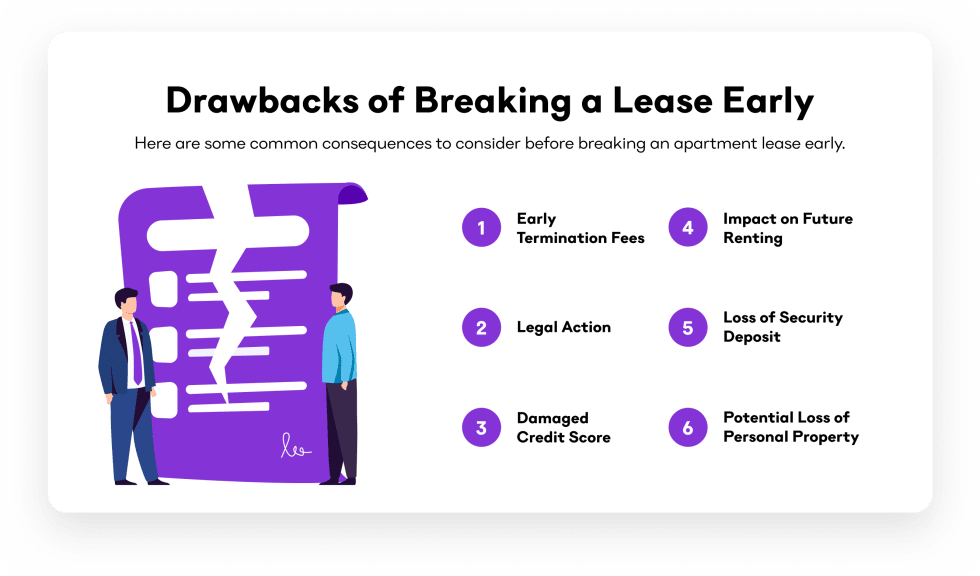
A lease is a contract that generally requires you to pay rent for the agreed term. If you move out early without using a lease provision, reaching an agreement with your landlord, or exercising a legal right, you may still owe money. Here is what usually happens, in order:
Notice. You tell your landlord in writing that you are moving out, following any notice rules in your lease.
Fee or rent owed. Leaving without a legal or agreed exit can trigger an early termination fee, rent until the unit is re-rented, or other permitted charges.
Deposit. If you owe money, your landlord may deduct it from your security deposit, as your state's rules allow.
Collections. An unpaid balance can be collected directly or sent to a collection agency.
Credit report. A collection account or court judgment can show up on your credit report.
Rental history. Unpaid rental debt or a lawsuit can appear in tenant-screening reports and make it harder to rent again.
Your landlord has to try to re-rent the unit. In most states, your landlord has to make a reasonable effort to re-rent the unit rather than charge you for the whole remaining term, and your liability ends when a new tenant starts paying. This is commonly called the duty to mitigate damages. A reasonable effort usually means advertising the unit, showing it to qualified applicants, and not turning down a suitable tenant without a good reason.
How long that takes depends on your market. In September 2026, units listed on Apartment List took an average of 34 days to lease, and the national vacancy index was 7.0%, according to Apartment List's National Rent Report. In most markets a landlord who lists the unit promptly should find a new tenant within a month or two, and your obligation ends when they start paying.
What Is the Typical Penalty for Breaking a Lease Early?
There is no single penalty. What you owe depends on your lease, why you are leaving, whether your landlord can re-rent the unit, and the laws where you live.
Flat early termination fee. Some leases let you end the lease early for a set fee, typically one to two months' rent. Check your lease for the exact amount, the notice you must give, and when the fee is due.
Rent until the unit is re-rented. With no buyout option and no legal reason to leave, you may owe rent while the unit sits vacant. Once a new tenant starts paying, you generally stop owing rent for that period, though other permitted costs may still apply.
Forfeited security deposit. Your landlord may use your deposit to cover unpaid rent or other allowed charges. Breaking a lease does not automatically mean losing the whole deposit, so review any itemized statement against your state's security deposit rules.
Reletting fee. A reletting fee is a charge some landlords add to cover the cost of preparing and marketing the unit for a new renter. See our guide to what a reletting fee is.
Can You Break a Lease Early Without a Penalty?
Yes. You can usually leave without the usual penalty if your lease has an early termination clause, your unit is unsafe or uninhabitable, you are on active-duty military orders, or your landlord broke the lease. An early termination clause may still require a fee, and having one doesn’t necessarily mean a penalty-free exit. Your situation and the law where you live decide which applies.
How Do You Break a Lease Without Paying a Penalty?
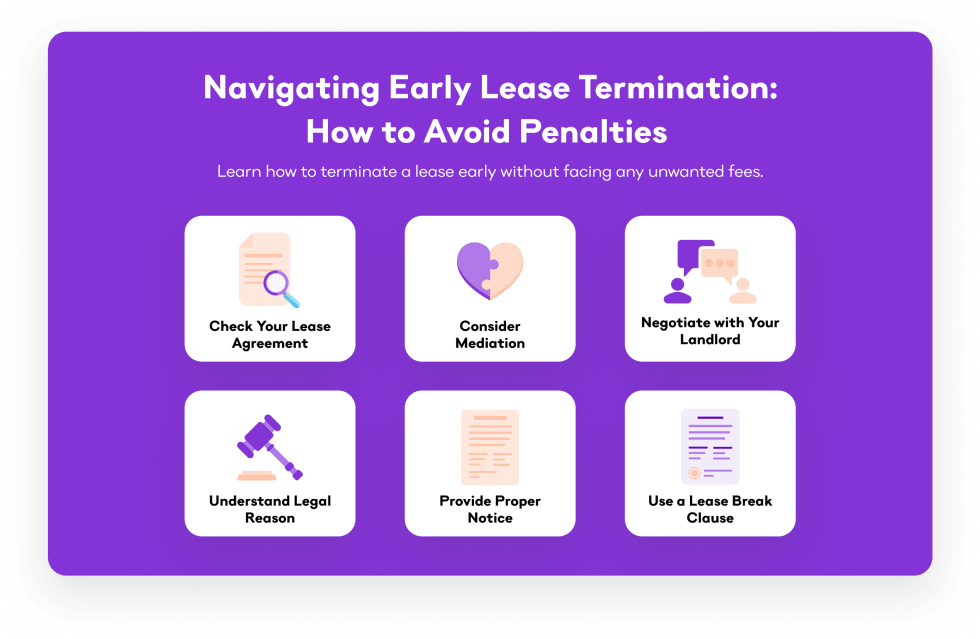
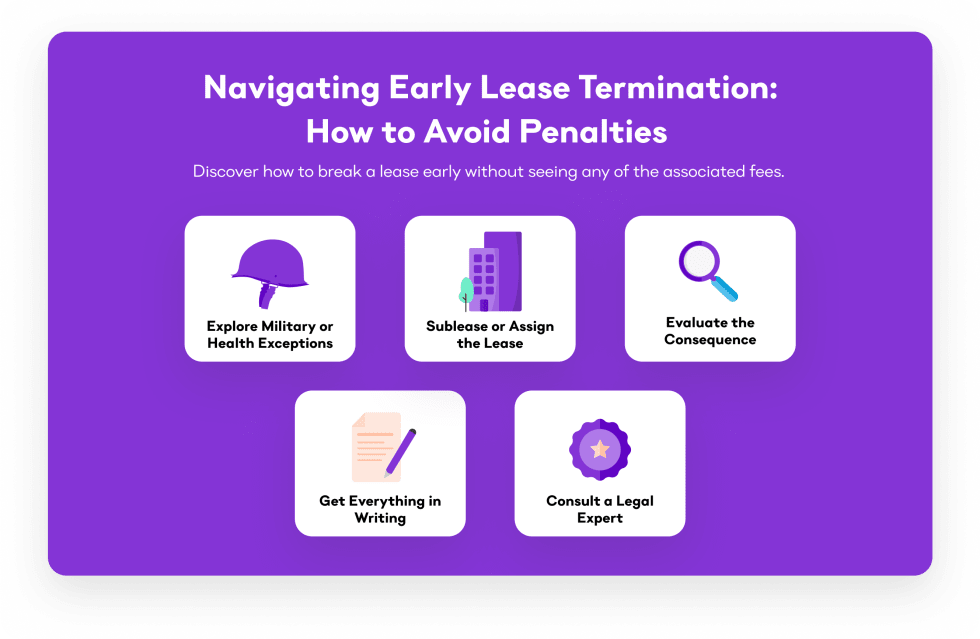
Don't just move out and stop paying rent. Start by checking whether you have a contractual or legal way out. If you don't, you can often reduce what you owe by negotiating or helping find a replacement tenant.
1. Check the Early Termination Clause
Read your lease agreement and search for terms like "early termination," "lease break," "buyout," or "reletting." The clause should say how much you will owe and how much notice you must give. Some leases allow a flat fee, while others add rent or other charges. Send your notice in writing, and our notice to vacate letter template can help.
Consider timing too. If your lease requires three months' rent to terminate early but you only have two months left, it may cost less to keep paying rent as usual. If you have questions about the provision, ask your landlord to explain it.
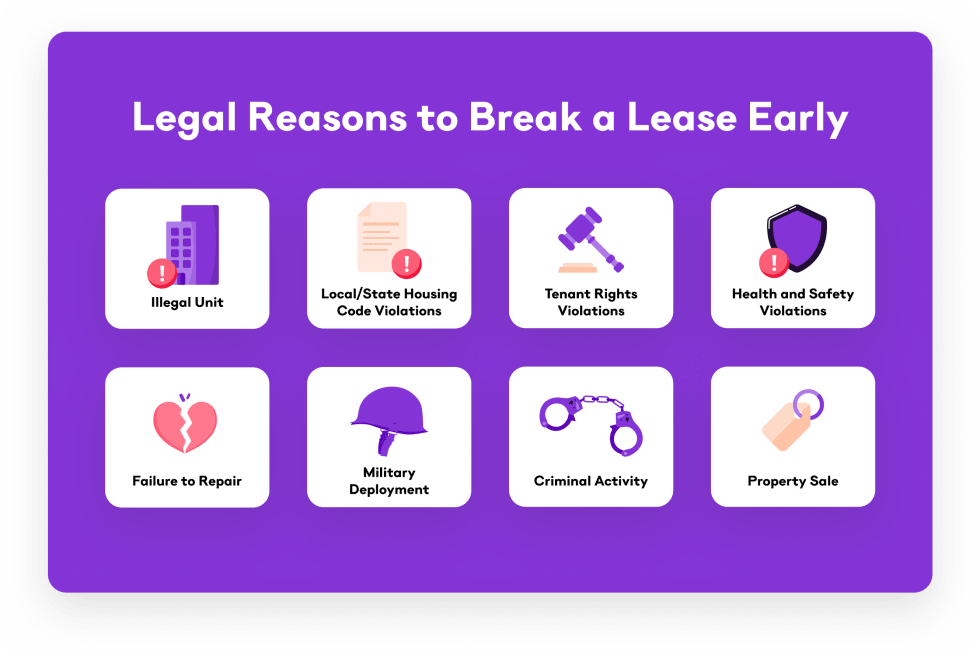
2. Know the Legal Reasons for Breaking a Lease
Some renters can end a lease early without the usual penalty. Rules vary by state and city, and not every problem qualifies. The three main situations are:
Unsafe or uninhabitable home. Electrical problems, pest infestations, fire hazards, no heat or hot water, broken windows, and illegally converted units can give you legal grounds to leave, depending on your state.
Military service. Under the Servicemembers Civil Relief Act (SCRA), a servicemember who signs a lease and then receives orders for a permanent change of station, a deployment of 90 days or more, or separation or retirement can terminate a residential lease at any time after receiving those orders, without penalty, according to the U.S. Department of Justice.
Serious landlord violations. A landlord who breaks the lease or tenant protection rules, such as entering without proper notice, may give you grounds to leave.
Some states also protect renters who are leaving because of domestic violence or stalking, usually with specific documentation and notice requirements. Check the rules where you live.
Before you talk to your landlord, document the problem, give any notice your state requires, and look into the protections where you live. The more informed you are, the better the conversation will go.
3. Negotiate with Your Landlord
Depending on your landlord, they may be open to negotiating on ending a lease early. If your apartment has a long waitlist, for example, they may be able to fill your unit quickly and with little financial loss.
If you decide to approach your landlord, here are some things you can do to have a successful conversation:
Explain the situation and your reasons for wanting to break the lease early, without going into personal or uncomfortable details.
Show that you intend to handle the move-out properly and on time.
Offer to pay a fee or give up your security deposit to compensate your landlord while they find someone to replace you.
Help your landlord find a replacement. Reach out to anyone you know who might be interested in your apartment, and offer to put them in touch with your landlord.
If money is the reason you need to leave, say so plainly and ask what payment arrangement or fee your landlord would accept.
4. Sublet or Assign the Lease
If your lease allows it, ask your landlord about subletting. A sublet lets another person live in the apartment while you stay responsible under the original lease. An assignment transfers your interest in the lease to another tenant. Your landlord may need to approve either one, and some leases prohibit both.
Here are some tips for finding someone to take over your lease. Our guide to finding a sublease lists places to look.
Offer a discount on monthly rent, the use of your furnishings, or another benefit to sweeten the deal.
Check with your landlord about whether the new tenant can extend their lease once the sublease ends.
Run a background check, or use a service that includes one.
Finding someone interested does not release you from the lease. Get your landlord's approval in writing.
5. Offer Your Security Deposit
Your landlord may accept your security deposit to offset their financial loss and inconvenience. You might agree to forfeit it in exchange for ending the lease on a specific date. Whether that is allowed depends on your lease and state law, and giving up your deposit does not automatically release you from everything else, so put exactly what it covers in writing.
It can also help to appeal to your landlord's human side. Some landlords will sympathize with an extenuating circumstance, like needing to move for your health or to be near family.
6. Find a Replacement Tenant
A replacement tenant shortens the time your apartment sits vacant and can make an early release easier to negotiate. Ask your landlord what qualifications a new tenant must meet and whether you can advertise the unit. Let your landlord handle the formal application and approval.
If you know your apartment has a waiting list, or your area is in high demand, politely pointing that out shows you are considerate of your landlord's situation. Until your landlord formally approves the new arrangement, you may still be responsible under your original lease.
7. Get It in Writing
Whatever you and your landlord agree to, put it in writing. A simple misunderstanding could escalate to a legal issue after you have moved out.
Your agreement should state your move-out date, how much you will pay, how your deposit will be handled, whether you owe any other rent or fees, and when your obligations under the lease end. Keep copies of the agreement, your lease, written notices, payment records, and your communications with your landlord.
Does Breaking a Lease Hurt Your Credit?
A broken lease is not itself reported to the credit bureaus. An unpaid balance that is sent to collections, or a court judgment, can appear on your credit report and in tenant-screening reports. Read more in our guide to whether breaking a lease hurts your credit.
Frequently Asked Questions
What happens if I break my lease?
If you break a lease without an early termination clause, an agreement, or a legally protected reason, you may owe an early termination fee, rent until the unit is re-rented, or other permitted costs. In most states, your landlord has to make a reasonable effort to re-rent the unit. An unpaid balance can lead to collections or a lawsuit and affect your credit and rental history.
Can I break my lease early?
Yes. Your lease may have an early termination clause, or you may have a legal reason to leave, such as qualifying military service or serious housing or landlord violations. If not, you can negotiate, sublet or assign the lease if allowed, or help find a replacement tenant. Leaving with no arrangement usually means you still owe rent.
How much does it cost to break a lease?
There is no universal cost. An early termination fee is typically one to two months' rent, but your lease may say otherwise. You may instead owe rent while the unit is vacant, a reletting fee, or other permitted costs. If you have only a short time left on your lease, compare the fee with the rent you would pay by staying.
Does breaking a lease hurt your credit?
Breaking a lease is not automatically reported to the credit bureaus. If you leave an unpaid balance and it goes to collections, that debt can appear on your credit report and in tenant-screening reports.
Do I lose my deposit if I break my lease?
Not automatically. Your landlord may use your deposit to cover unpaid rent or other allowed charges, and deposit rules vary by state. If you negotiate an early exit, ask for written confirmation of how the deposit will be applied and whether you will owe anything else. Our guide to getting your security deposit refunded walks through the process.
Can my landlord sue me for breaking my lease?
A landlord may be able to take legal action to recover money you owe under a broken lease. What they can recover depends on your lease and local law. If you receive legal papers, don't ignore them. Consider contacting a local legal aid organization or an attorney.
What is a reletting fee?
A reletting fee is a charge some landlords add to cover the cost of preparing and marketing the unit for a new renter. See our guide to what a reletting fee is.
What is an early termination clause?
An early termination clause is a section of your lease that explains how to end the agreement early, such as a flat fee or required notice. Clauses are common but not universal, so check your lease first. Confirm the final amount with your landlord in writing.
Ready to find a new place? Take the Apartment List Quiz to get matched with apartments that fit your budget.
Dr. Katherine Blake is a content editor with Apartment List, where she helps ensure our renter and rental management content is fresh and informed by the latest data. Read More
Tristian Brown is a Senior Content Marketing Associate at Apartment List, where he manages high-quality content that helps modern renters find the perfect home. He brings an immense wealth of knowledge to the team, having earned a Bachelor of Arts in Marketing and European Management from the University of San Diego and EM Strasbourg Business School. Read More