Photos can't show you water pressure, cell signal, or noise. Use this room-by-room apartment tour checklist to catch what listings hide, plus the questions to ask while you're there.
Last updated: October 2026 | Read time: 7 minutes
On an apartment tour, check the things photos can't show you: water pressure and hot water, outlets, cell signal, window seals and locks, noise through walls and floors, appliance condition, and signs of pests or water damage. Ask the questions that change your monthly cost or your lease terms while you're there, and get anything the agent promises in writing before you apply. This checklist is for the day you decide; the move-in inspection checklist is for the day you get the keys.
Key Takeaways
- Test five things in every room. Outlets, cell signal, windows, floors and ceilings, and vents and detectors.
- Bring the right tools. A phone charger, tape measure, this checklist, a flashlight, and your application documents.
- Get promises in writing. If an agent says they'll fix something, swap an appliance, or waive a fee, ask for it in writing before you apply.
- Ask for a second visit. Go back at a different time of day. Evening shows you noise. Morning shows you parking and your commute.
Table of Contents
What Should You Look For During an Apartment Tour?
Test how the apartment works, not just how it looks. Work through each room below, and ask the agent before you run water, appliances, or locks.
In Every Room
- Plug in your phone charger at an outlet in every room. A dead or loose outlet is a repair you'll be chasing later.
- Check your cell signal in each room, especially bedrooms and rooms with thick walls. No bars means dropped calls at home.
- Open every window. It should slide smoothly, close fully, and lock. A window that sticks, rattles, or shows cracked seals will leak air and noise.
- Look at the floors for buckling, soft spots, stains, or cracked tiles. Soft or spongy floor near a wall often points to a moisture problem.
- Look at the ceiling and upper corners for stains, discoloration, or bubbling paint. A brown ring or bubble means water got in.
- Test the smoke and carbon monoxide detectors if you're allowed to. A missing detector or a dead one should be fixed before move-in.
- Turn on every vent and fan and listen for rattling or grinding. Weak airflow or a grinding fan means maintenance has been skipped.
- Measure the spots where your bed, sofa, and desk need to fit. Staged furniture can make a room look bigger than it is.
- Look under rugs and furniture when you can for stains, damaged flooring, or patches that look covered up.
Kitchen
- Turn on every faucet. The water should run clear and strong with no drip under the handle or around the base.
- Run the dishwasher if the agent allows it. Standing water, grinding noises, or a puddle underneath means a repair is coming.
- Turn on the oven, stovetop, and microwave. A burner that never heats or an oven that takes forever to warm up will annoy you every day.
- Open the refrigerator and freezer. The door should seal shut, with no frost buildup or lingering odor.
- Open every cabinet and drawer. Look for broken hinges, sagging shelves, droppings, or damp spots.
- Look under the kitchen sink for water stains, warped wood, or a musty smell.
Bathroom
- Run the shower for two minutes and check that the water stays hot and the drain keeps up. Weak pressure is a common renter regret, so ask to test it even if it feels awkward.
- Flush the toilet while the shower runs. A big drop in pressure or a toilet that struggles to flush can signal a plumbing problem.
- Open every cabinet under a sink and look for water stains or a musty smell.
- Turn on the bathroom fan. It should run smoothly and clear steam from a mirror. A fan that barely moves air invites mold.
- Look around the toilet, tub, shower, and sink for cracked caulk, dark staining, or soft flooring. Press on the floor beside the toilet. It should feel solid.
Bedroom and Closets
- Stand in the bedroom with the door closed and listen for a full minute. Note voices, footsteps, traffic, elevators, and HVAC hum. Anything you notice in one minute you'll notice every night.
- Open every closet. Check that you have room for your clothes and look for musty smells, water stains, or droppings.
- Look along baseboards and closet corners for gaps or small holes that pests can use.
- Measure the room against your own furniture before you decide it fits.
Windows, Doors, and Locks
- Close the front door and check that it latches without a shove. A door that sticks or needs force to lock is both a security issue and a repair.
- Lock every door and window latch you can reach. A loose or broken lock should be fixed before you move in.
- Ask whether the locks get changed or rekeyed between tenants.
- Listen near the windows and the front door for traffic, construction, or hallway noise. It's easy to miss from the middle of the room.
Building and Common Areas
- Look at hallways, stairwells, and elevators for water stains, burned-out lights, and trash. Upkeep in shared spaces shows how maintenance requests get handled.
- Listen in the hallway outside the unit. A door next to an elevator, stairwell, or trash room will be louder than a quick tour suggests.
- Check the laundry room, package room, and trash area. Machines should run, and the room should be clean and free of pest signs.
- Look at the entry doors, intercom, and exterior lighting. A broken door latch or dark entrance affects how safe you feel coming home.
Outside and the Block
- Walk around the building. Look for broken sidewalks, standing water, overflowing dumpsters, and burned-out lights.
- Look at the exterior for peeling paint, cracks, or sagging gutters. Those are early signs of water getting in.
- Check the parking lot, garage, or bike storage you'll actually use. Count open spaces and see how tight the turns are.
- Listen for traffic, trains, bars, or construction. Stand still for a minute and note what you hear.
- Walk the route to the nearest transit stop or grocery store you'd use. See how it feels on foot.
What Should You Bring to an Apartment Tour?
Bring five things:
- Phone charger: Test outlets in every room.
- Tape measure: Check rooms, closets, and doorways against your furniture.
- This checklist: Keep it open on your phone or print it out.
- Flashlight or phone light: Look under sinks, in closets, and in dark corners.
- Application documents: Having your ID, proof of income, and rental history on hand lets you apply on the spot. See the documents needed to rent an apartment.
Photos and video help you compare places later. Ask permission before you shoot, and skip photos of people, other tenants' belongings, and private documents.
What Questions Should You Ask During the Tour?
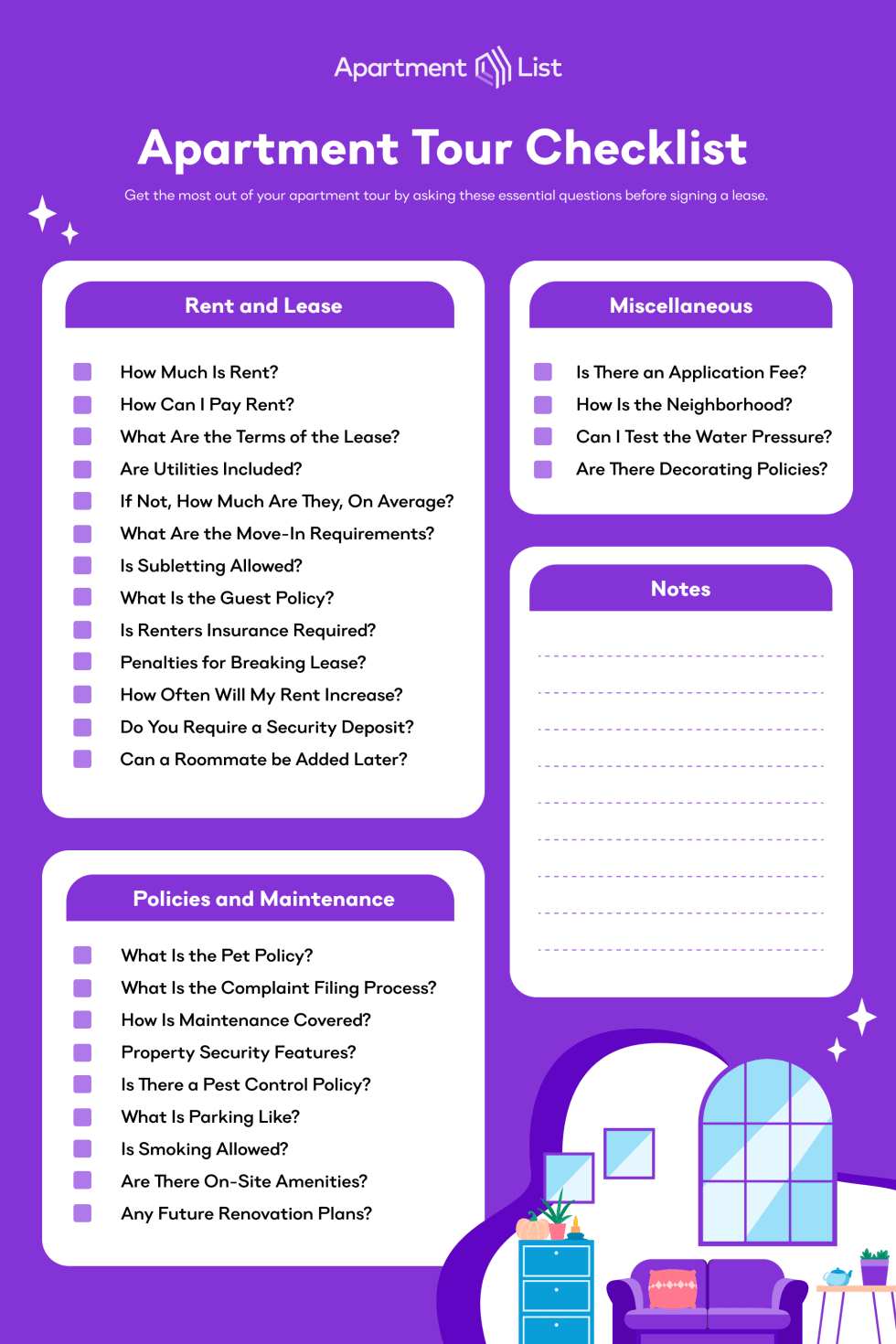
These are the questions the leasing office can't answer from a desk. For fees, lease terms, pet policies, utilities, insurance, and application requirements, see 36 Questions to Ask When Renting an Apartment.
- Which exact unit is available? Ask for the unit number and confirm the layout and finishes match the listing and the model.
- Which parking spot comes with it? Ask to see the spot and whether it's assigned, shared, or covered.
- Which appliances stay with the apartment? Confirm each one, including the washer and dryer if you saw them.
- When was it last painted? Fresh paint can hide a repair. Ask what was fixed at the same time.
- When was the carpet replaced? Ask whether it'll be cleaned or replaced before you move in.
- What’s directly above and below the apartment? Another unit, a gym, or a lobby changes the noise you'll hear.
- Where are the water heater and breaker panel? Know where they are and who can get to them.
- Are the windows original? Older windows can mean drafts and street noise.
Get it in writing. If the agent promises a repair, a new appliance, a paint job, or a waived fee, ask for it in an email or on the lease before you apply. A verbal promise is hard to prove later.
What Are Red Flags on an Apartment Tour?
A red flag doesn't always mean walk away, but it does mean ask questions before you apply.
- Strong musty or chemical smells: These can point to moisture, mold, pests, or something being covered up.
- Fresh paint in one spot: A patch near a ceiling, window, or pipe is worth asking about.
- Water stains or bubbling paint: Check ceilings, walls, and the bottom of cabinets.
- Broken fixtures: Dead outlets, loose locks, and leaky faucets are repairs you'd be waiting on.
- Signs of pests: Droppings, chewed materials, traps, or odd smells.
- Loud noise during a short tour: If you can hear it in 20 minutes, you'll hear it every day.
- Pressure to apply right now: Be wary if the agent rushes you or discourages questions.
- A unit that doesn't match the listing: Different appliances, layout, or finishes than advertised need an explanation before you apply.
If something feels off, slow down. You can ask for another tour or compare other apartments first. To learn more, check out our article on Rental Scams: Red Flags, How to Avoid Them, and How to Report Fraud.
How Long Does an Apartment Tour Take?
Plan for about 30 minutes. Many tours run 15 to 30 minutes, and a full walk through every room on this checklist can take longer.
A studio in a small building goes quickly. A larger apartment in a big complex, with common areas, takes more time. If the agent is rushing you, keep going and ask for a few more minutes. You can also ask whether you can come back for a second look before you apply.
Should You Tour at a Different Time of Day?
Yes, if you're serious about the place, ask for a second visit at a different time. One tour shows you one slice of the day.
- Evening, around 7 pm: Listen for neighbors, TV and music through the walls, traffic, and nightlife. Check how well the hallways and entrances are lit.
- Morning, around 8 am: See how full the parking lot is, how loud the building gets as people leave, and how the morning commute looks from the front door.
- Midday: Check how much natural light comes in and whether your cell signal holds.
If a full second tour isn't possible, ask whether you can stop by the building or walk the block at a different time. If you're still early in your search, our guide on when to start your apartment search can help you plan time for a second visit.
Frequently Asked Questions
What Should I Look for When Touring an Apartment?
Check what photos can't show. Test outlets, water pressure, hot water, appliances, windows, locks, and cell signal. Look for water damage and pests, and listen for noise from neighbors, hallways, and outside. Then check the building and the block.
What Questions Should I Ask When Touring an Apartment?
Ask about the exact unit: which one is available, which parking spot comes with it, which appliances stay, when it was last painted, what’s directly above and below the apartment, and whether the windows are original. For fees, lease terms, and pets, see 36 Questions to Ask When Renting an Apartment.
How Long Does an Apartment Tour Take?
Many tours run 15 to 30 minutes. Plan on more time if you want to check every room and the common areas.
Is a Virtual Tour Enough to Choose an Apartment?
A virtual tour is a good way to narrow your list, especially if you're moving from another city. It can't show you water pressure, cell signal, noise, window seals, or odors. Use a virtual tour to cut down your options, then tour your top choice in person before you commit.
Can I Take Photos and Video During an Apartment Tour?
Usually, but ask the agent first. Don't photograph current residents, personal belongings, or private documents.
What If I Notice Damage During an Apartment Tour?
Take a note, ask the agent about it, and get any repair promise in writing before you apply. When you get your keys, use a rental inspection checklist to document the apartment's condition before you move in.