An efficiency apartment is a one-room unit with a kitchenette instead of a full kitchen. Here is how it compares to a studio in size, layout, and cost, and how to spot one in a listing.
Last Updated: October 2, 2026 | Read time: 8 min
An efficiency apartment is a single-room unit with a kitchenette (a mini fridge, a small sink, and a cooktop or microwave rather than a full range and oven) instead of a full kitchen. A studio is also one room, but it has a full kitchen and is usually larger. Listings use the two words loosely, so the kitchen, not the label, tells you which one you are looking at.
Key Takeaways
The definition: An efficiency is a one-room rental with a kitchenette and its own bathroom.
The one reliable difference: The kitchen. A kitchenette means efficiency. A full kitchen means studio.
The typical size relationship: Efficiencies typically run smaller than studios, though square footage varies by city and building.
Why efficiencies cost less: They usually rent for less because of a smaller footprint and a simpler kitchen. How much less depends on the building and neighborhood.
What Is an Efficiency Apartment?
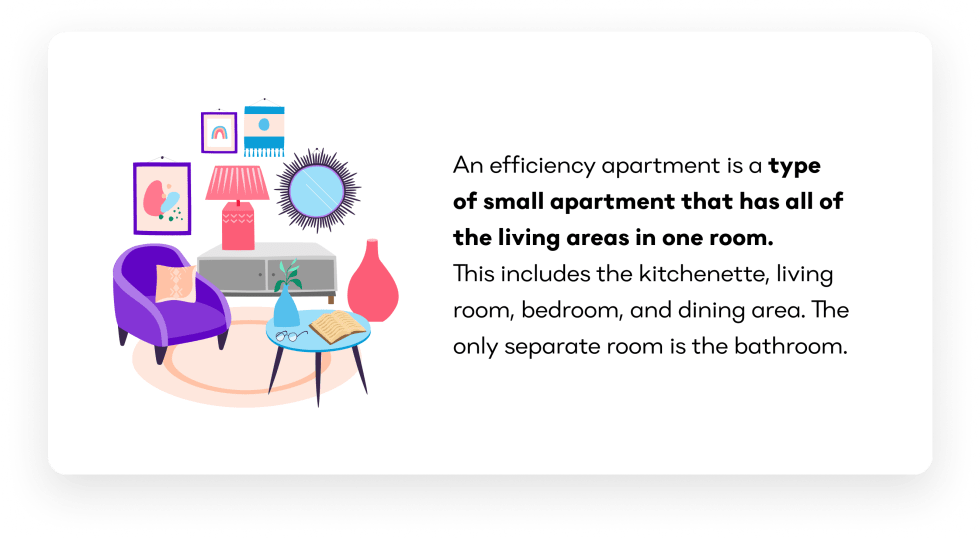
An efficiency apartment is a single-room rental that combines sleeping, living, and cooking space in one area, with a kitchenette instead of a full kitchen and its own bathroom.
The kitchenette is the defining feature: expect a mini fridge, a small sink, and a one- or two-burner cooktop or a microwave, but rarely a full-size oven or range. Efficiencies typically run on the smaller side, often 250 to 350 square feet, and they are more common in older or converted buildings than in new construction.
If you are weighing an efficiency against other options, our apartment types overview shows how it compares with studios, one-bedrooms, and more.
What Is a Studio Apartment?
A studio apartment is also a single room that combines living, sleeping, and cooking areas, but it comes with a full kitchen: a full-size refrigerator, a stove, an oven, and more counter space than an efficiency has.
Studios typically run larger, often 400 to 600 square feet, and most newer apartment buildings include them. For layouts, sizing, and what to expect, see our full guide to studio apartments.
Efficiency vs. Studio Apartment at a Glance
Here is how the two unit types typically compare side by side.
Efficiency
Studio
Layout
One room with a kitchenette along one wall, plus a bathroom
One room with a full kitchen, plus a bathroom
Typical size range
Typically 250 to 350 square feet
Typically 400 to 600 square feet
Kitchen
Kitchenette: mini fridge, one or two burners, little to no oven
Full kitchen: full-size fridge, stove, oven, more counter space
Bathroom
Often smaller
Usually larger
Sleeping area
Part of the main room, often near the kitchenette
Part of the main room, sometimes set off in an alcove
Where they're common
Older buildings, converted houses
Most apartment buildings, including new construction
Who they suit
Renters who want a lower rent and cook lightly
Renters who want more room and a full kitchen
How Can You Tell an Efficiency From a Studio in a Listing?
Property managers do not always use "efficiency" and "studio" consistently, so the listing title alone will not tell you much. Read the unit description for the kitchen details instead.
A few words signal an efficiency: "kitchenette," "efficiency kitchen," "mini fridge," "two-burner," "no oven," and "convertible." If you see those terms, expect a kitchenette setup even if the listing calls the unit a studio.
Before you book a tour, ask the leasing office a few direct questions:
Is there a full-size refrigerator?
Is there an oven, or only a cooktop or microwave?
How many burners does the stovetop have?
Does the bathroom have its own door, or does it open directly into the main room?
The answers tell you what the unit actually has.
When you search, compare the square footage in each listing instead of relying on the "studio" or "efficiency" label, since the two get used interchangeably. Listings that only say "studio" are worth a second look, because some turn out to be efficiencies once you read the details. Older buildings and converted houses are a good place to start, since efficiencies are more common there.
Are Efficiency Apartments Cheaper Than Studios?
Efficiency apartments usually rent for less than studios in the same building or neighborhood. Part of that comes down to square footage: less space generally means lower rent. The kitchen plays a role too, since a kitchenette costs less to build and maintain than a full kitchen with a stove, oven, and more cabinetry. Efficiencies are also more likely to sit in older buildings, which tend to carry lower rents than newer construction with updated finishes and amenities.
The savings are not guaranteed. Without a full kitchen, you may eat out more, which can eat into what you save on rent. And in a high-demand neighborhood, a well-located efficiency can cost close to a studio a few blocks away. How much less you pay depends on the building and the neighborhood, so compare a few specific listings rather than assuming the gap will be large.
What Is It Like to Live in an Efficiency Apartment?
Cooking. A kitchenette means working around a missing stove and oven. Most people cover the gap with a microwave, a toaster oven, an air fryer, or a slow cooker. A two-burner cooktop plus a microwave handles most simple weeknight meals, though it takes some adjusting if you cook a lot.
Storage. Cabinet space in a kitchenette is limited, and closets are often smaller too. Wall shelving, over-the-door organizers, and under-bed bins add space without taking up floor.
Furniture. Furniture has to do double duty. A fold-out or Murphy bed frees up floor space during the day, and a small table that extends or folds away gives you room to eat or work without giving up permanent square footage.
Noise and Privacy. Sleeping, living, and cooking all happen in one room, so noise and privacy take planning. A sound machine helps if you are a light sleeper, and a curtain or room divider creates a visual break between your bed and the rest of the space, even though it will not block sound.
Who Should Rent an Efficiency Apartment?
Efficiencies fit renters who are budget-conscious, do not cook often, and do not need much space. That often includes students, recent grads, and solo renters who want to live somewhere central without paying for square footage they will not use. If being close to downtown matters more to you than having an oven, an efficiency can get you there for less.
They are usually a tighter fit for couples, roommates, or anyone who cooks regularly, since the small kitchenette and single shared room get cramped fast.
If you need more breathing room or a full kitchen, a studio is usually the better fit. If you need separate spaces entirely, compare studios to one-bedrooms instead.
What Should You Check Before Renting an Efficiency?
Before you sign a lease on an efficiency, a few quick checks can save you from surprises after you move in:
Measure before you sign. Bring a tape measure to confirm your furniture, especially a bed frame or fold-out table, will fit.
Confirm which kitchenette appliances are present. Ask whether the mini fridge, cooktop, and any microwave stay with the unit or whether you need to bring your own.
Ask about utilities. Find out whether electricity, gas, water, and internet are included in rent or billed separately, since that affects your real monthly cost.
Check for outlets near the kitchenette. If you plan to use a slow cooker or air fryer, make sure enough outlets are within reach.
Ask about building laundry. Efficiencies often lack in-unit laundry, so confirm whether the building has a shared laundry room and how you access it.
For a full walkthrough of what to look for in person, use our apartment tour checklist before you tour.
Frequently Asked Questions
What is an efficiency apartment?
An efficiency apartment is a single-room rental with a kitchenette instead of a full kitchen, combining sleeping, living, and cooking space in one area with its own bathroom.
Is an efficiency apartment the same as a studio? No. Both are single-room units, but an efficiency has a kitchenette and a studio has a full kitchen. Efficiencies also tend to run smaller.
How big is an efficiency apartment?
Efficiencies typically range from about 250 to 350 square feet, though sizes vary by building and city.
Do efficiencies have kitchens?
Efficiencies have a kitchenette rather than a full kitchen: usually a mini fridge, a small sink, and one or two burners, but rarely a full-size oven or range.
Are efficiencies cheaper than studios?
Efficiencies usually rent for less than studios in the same building or area, mainly because of their smaller size and simpler kitchen. The exact difference depends on the building and neighborhood.
Can two people live in an efficiency apartment?
It is possible, but efficiencies are usually sized for one person, and the small kitchenette and shared single room make it a tight fit for two people long-term.
Dr. Katherine Blake is a content editor with Apartment List, where she helps ensure our renter and rental management content is fresh and informed by the latest data. Read More
Tristian Brown is a Senior Content Marketing Associate at Apartment List, where he manages high-quality content that helps modern renters find the perfect home. He brings an immense wealth of knowledge to the team, having earned a Bachelor of Arts in Marketing and European Management from the University of San Diego and EM Strasbourg Business School. Read More
Justin is a Content Manager and contributing author at Apartment List, helping people navigate the world of renting. Justin previously spent his time earning his BBA in Marketing from Boise State University. Read More
Susan is an accomplished freelance writer whose passion for rental real estate, travel, and digital marketing has been the driving force behind her nearly 15-year career. Throughout her professional journey, Susan has become a seasoned veteran in creating compelling and informative content focused on the tenant/landlord relationship. Read More