What Is Fee Transparency and What Does It Mean for Your Listings?
The Bottom Line on Fee Transparency
Fee transparency is reshaping how renters search, evaluate, and engage with listings. An analysis of Apartment List data shows that while properties may experience short-term performance shifts, transparency ultimately drives higher-quality engagement, more informed renters, and stable leasing outcomes.
This report draws on nationwide property data, renter experiments, and year-over-year cohort analysis to quantify the impact of fee transparency today and what it signals for future performance.
The Challenge: How Does Fee Transparency Affect Listing Performance?
When fee transparency launched, partners immediately asked, "How is this impacting my listings and what does it mean for performance?" That question underscored a meaningful shift in the market. Fee transparency fundamentally changes how listings appear in search, how renters evaluate affordability, and when and how renters choose to engage.
For operators, the concern was immediate and practical: would showing the total price reduce leads and if so, what would that mean for leases?
Why Apartment List Has a Unique Perspective on Fee Transparency
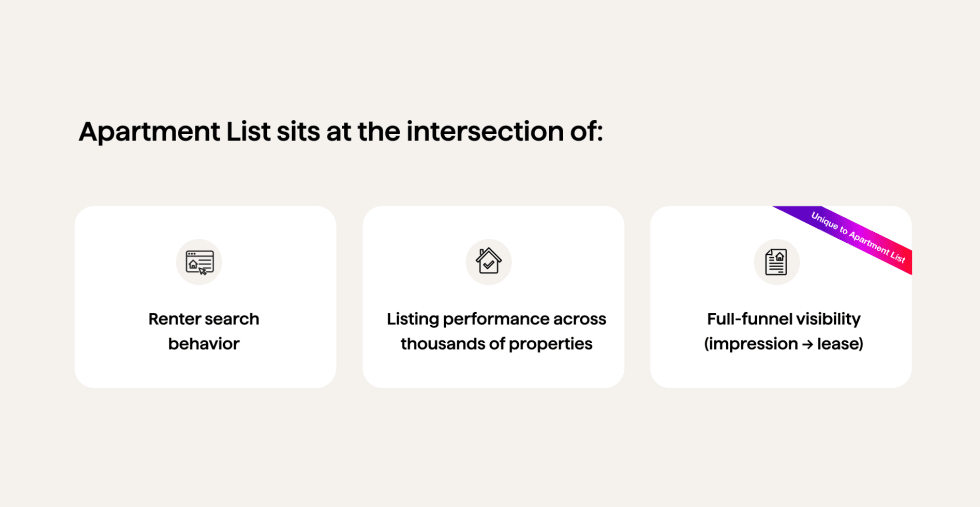
Apartment List sits at the intersection of:
- Renter search behavior
- Listing performance across thousands of properties
- Full-funnel visibility (impression to lease)
We can observe how renters actively cycle through and compare properties, evaluating options rather than passively scanning a large list of properties.
That dynamic view enables us to answer what others can't: What actually happens when fee transparency goes live, at scale.
What We Saw: The Full Funnel Story
1. Engagement Is Up, Even as Volume Shifts
Listings with fee transparency are seeing stronger renter engagement signals.
Key trends:
- Photo gallery view rates nearly doubled for Fee Transparency properties vs both non-Fee Transparency and national platform averages
- Renters are spending more time evaluating listings
- Higher intent signals earlier in the journey
This indicates:
- Renters are more informed
- Renters are more selective
- Listings are attracting more serious consideration
2. Mid-Funnel Volume Decreases, But That's Not a Negative
With fee transparency:
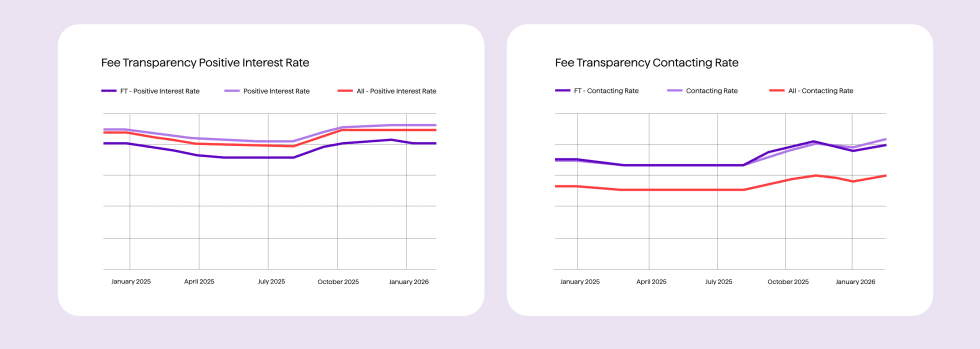
- Tour volume decreased
- Lead volume decreased slightly
At first glance, this may appear negative, but the data tells a different story: We hypothesize that lower-quality leads are being filtered out earlier. Renters self-select based on full pricing upfront and we expect these segments to converge the more renters understand total price and the more properties adopt total price.
This results in a more efficient funnel, not a weaker one.
3. The Adjustment Is Real & Smaller Than Expected
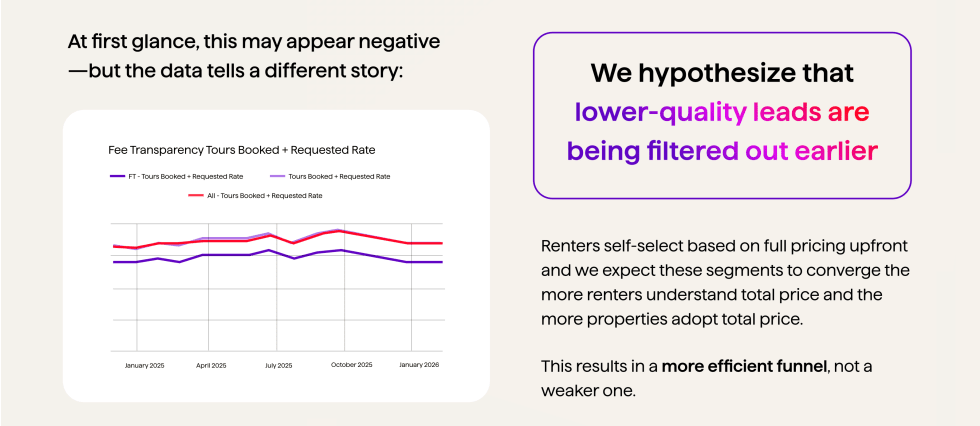
NO CHANGE TO LEAD VOLUME, but there is an initial shift when fee transparency is introduced:
- Renters need time to recalibrate expectations around total price
- Top-of-funnel activity adjusts
As a result, properties with fee transparency generate about 1.7% fewer leads YoY than properties without it, but importantly, they are still outperforming the national YoY benchmark rate.
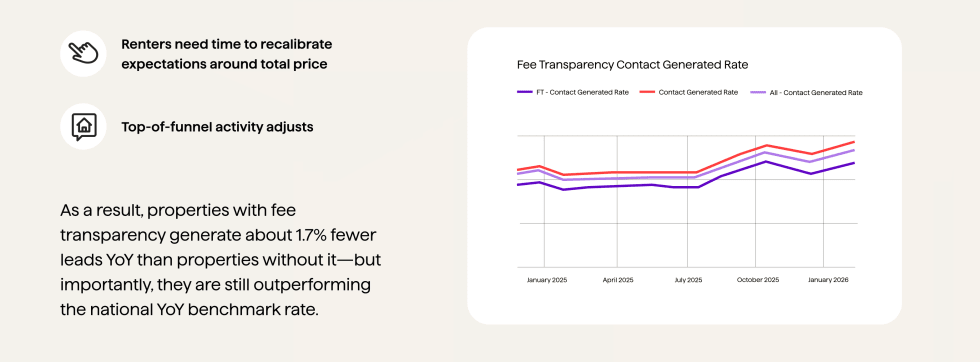
4. Fee Transparency Boosts C2L Above National Benchmarks
Despite changes across the funnel: Leases per property remain stable for both fee transparency and non-fee transparency properties.
- No meaningful negative impact on leasing outcomes
- Contact-to-lease conversion even increased for properties on fee transparency compared to non-fee transparency properties and the national average
This is the most important takeaway:
- Fewer leads do not mean fewer leases
- The funnel is becoming higher quality and more efficient
Search Behavior Is Evolving. What Does the New Standard Look Like?
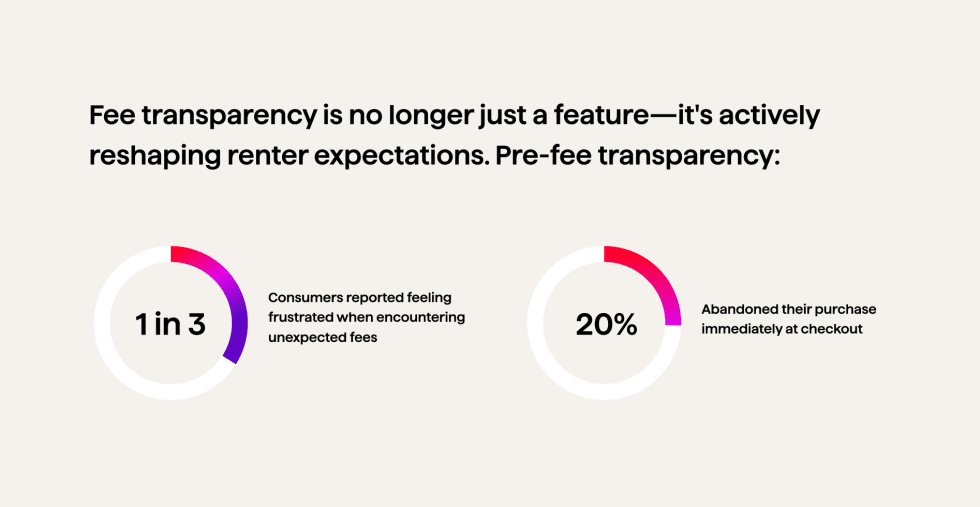
Fee transparency is no longer just a feature. It's actively reshaping renter expectations.
As the market evolves, renters are adapting to all-in pricing models, changing how they compare listings, and placing a higher premium on clarity and trust. This isn't surprising: in a 2025 national survey, more than 1 in 3 consumers reported feeling frustrated when encountering unexpected fees, and 20% abandoned their purchase immediately at checkout. In the rental market specifically, the SatisFacts 2025 Biennial Online Renter Study found that "information on mandatory fees beyond the advertised rent" ranked #1 in importance among renters and hidden fees are the leading trigger for negative reviews.
While renters are still learning how to navigate and evaluate total pricing, we expect behaviors between fee-transparent and non-fee-transparent listings to converge over time. This shift mirrors what has already happened in industries like travel, short-term rentals, and ticketing. For example:
- Expedia now includes all mandatory fees in the headline price, citing hidden fees as the #1 complaint from travelers (Skift Research, 2024).
- Airbnb made total price display the global default in 2025, after which nearly 300,000 listings removed or lowered their fees and 40% of active listings eliminated their cleaning fee entirely.
- Ticketmaster moved to all-in pricing and reported an 8% lift in completed transactions in the first six months, reversing a model where up to 50% of fans had abandoned purchases once they saw the true total at checkout.
All-in pricing isn't a differentiator. It's the standard.
"We're at the beginning of a broader shift in renter behavior. Fee transparency builds trust, and over time, it will become the baseline expectation across the industry."
— Sierra Hahn-Ventrell, Director of Product Management, Supply, Apartment List
How Apartment List Handled Fee Transparency So You Don't Have To
Fee transparency introduced new layers of complexity, from interpreting data and presenting pricing clearly to navigating shifts in renter and operator behavior. Apartment List absorbed that complexity on behalf of its partners by testing across thousands of properties, running continuous A/B experiments, refining the user experience, and automating integrations. The result was a smoother transition for operators, clearer insights grounded in real data, and a strong foundation for ongoing performance improvements.
Key Takeaways for Partners
- Expect a short-term lead adjustment, not a long-term lease decline
- Engagement quality improves, even if volume shifts
- Mid-funnel drop-off reflects better lead filtering
- Leasing performance remains stable
- Fee transparency is becoming the industry standard
Our Case Study Methodology
- Coverage across 44 states
- Properties active for 12+ months on Apartment List (YoY comparison)
Fee Transparency FAQs
Does Fee Transparency Reduce Leads for Apartment Listings?
Properties with fee transparency generate about 1.7% fewer leads year-over-year compared to properties without it. However, they still outperform the national year-over-year benchmark rate, and leases per property remain stable. The reduction reflects renters self-selecting based on full pricing upfront, not a decline in leasing performance.
Does Showing Total Price Hurt Apartment Leasing Outcomes?
No. Apartment List data shows that contact-to-lease conversion actually increased for properties with fee transparency compared to both non-fee-transparent properties and the national average. Fewer leads does not mean fewer leases — the funnel becomes more efficient, not weaker.
Why Do Photo Gallery View Rates Increase With Fee Transparency?
When renters see total pricing upfront, those who engage are more serious about the listing. Apartment List data shows photo gallery view rates nearly doubled for fee-transparent properties compared to non-fee-transparent properties and national platform averages, signaling higher intent earlier in the search process.
Is Fee Transparency Becoming the Standard in Rental Listings?
Yes. Fee transparency is following the same path as all-in pricing in travel, short-term rentals, and ticketing. The SatisFacts 2025 Biennial Online Renter Study found that information on mandatory fees ranked number one in importance among renters. Apartment List expects fee-transparent and non-fee-transparent listing behavior to converge as renter expectations continue to shift.
What Does Fee Transparency Mean for Multifamily Operators?
Operators should expect a short-term adjustment in lead volume when fee transparency is introduced, as renters recalibrate around total pricing. Mid-funnel drop-off reflects better lead filtering, not lost demand. Leasing performance remains stable, and engagement quality improves; making fee transparency a net positive for operators focused on leasing efficiency.
Share this Article