$3,850
5201 Kinnabeck Lane, Columbus, OH 43220(380) 205-0733Rent Savings
- 4 units available
- 4 bed
- Amenities
In unit laundry, Patio / balcony, Pet friendly, 24hr maintenance, Garage, Stainless steel + more
Verified listing
Verified
Yes, you can paint over wallpaper if it’s well-adhered, prepped, and sealed with an oil-based primer before getting started. Continue reading to learn more.
Yes, you can paint over wallpaper if it’s in good condition, securely attached, and properly prepped. It’s not always the best choice, but with the right tools correct and proper instruction you can achieve a clean, updated finishwithout the hassle of stripping old wallpaper.
Not every wallpaper type is a good candidate, but with the right primer and prep, you can achieve a fresh, updated look. In this guide, we’ll cover:
Read on and get started turning those dated walls into a surface you’ll love.
Most of the time, people opt to remove wallpaper instead of painting over it, but there are many reasons why that might not be an option.
Painting over wallpaper is often a workable solution, but there are some cases where it’s better to avoid it.
What does a good job of painting over wallpaper look like? Check out this video from Refresh Home Improvements:
Not all types of wallpaper make a good candidate for painting. Use this quick checklist and a couple of simple tests to decide.
Quick Checklist:
Wallpaper Types to Watch For: Vinyl-coated: Not suitable. The slick surface prevents paint from sticking. Fabric-backed: Paint may soak in unevenly and show through leaving blotchy results. Non-woven or primed: Usually the safest bet for painting over.
Still not sure? Use these two simple tests to help decide which works best:
Tape Test: Press painter’s tape on a hidden seam. If the paper lifts when you pull it off, don’t paint.
Spot Test: Prime a small section, let it dry, then add paint. Check for bubbling, peeling, or uneven coverage before tackling the whole wall, if at all.
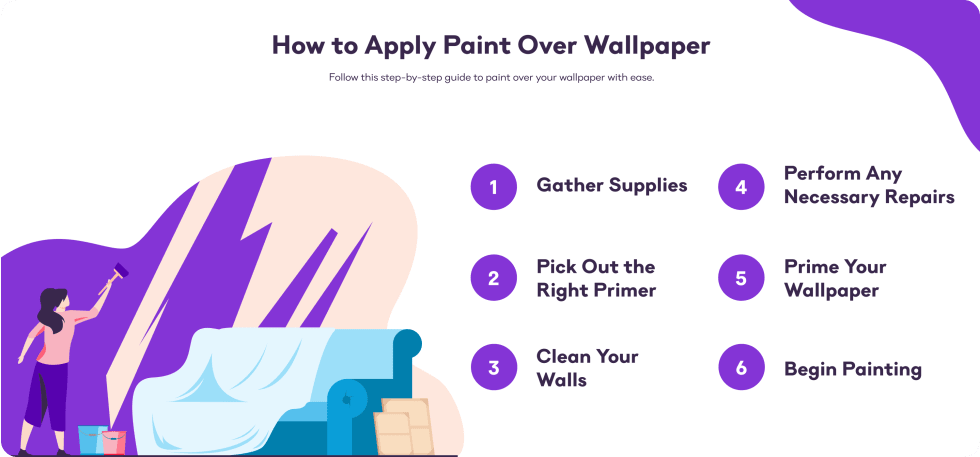
You’ve made the decision and you’re ready to paint over your wallpaper. Here’s how to get started.
Always gather the necessary materials before starting any project. For wallpaper painting, we recommend personal protective equipment and the proper tools, including:
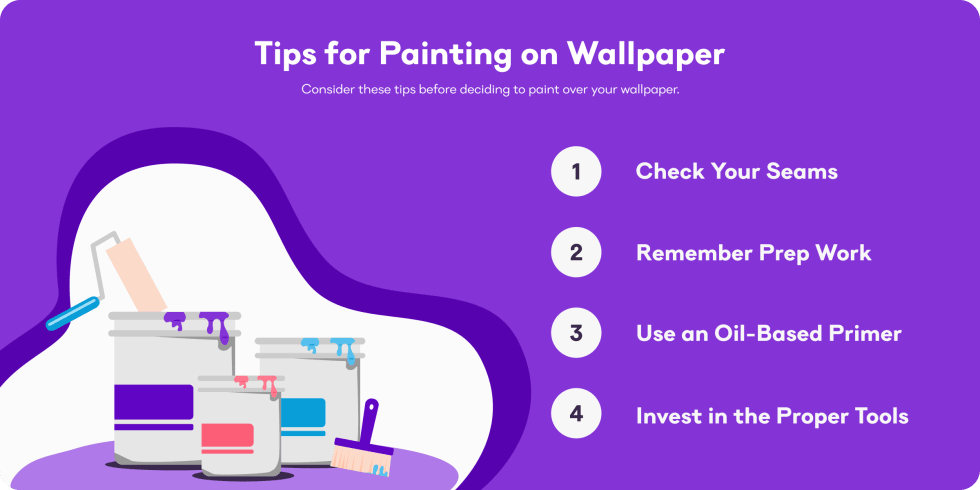
Never skimp on the primer, preferably an oil-based primer to create a barrier between the wallpaper and latex paint so the paper will not lose its grip and peel off the wall. Be patient and let it dry, as oil-based primers tend to dry slower. This step also does a better job of blocking any of the colors or designs of the wallpaper from showing through.
Paint works best on smooth surfaces, so always check the seams and curling edges of your wallpaper before you start painting. If you feel anything peeling back, trim it away. You can always add compound putty to glue and smooth any gaps. Finish off by sanding patched areas lightly for a flat, smooth surface.
Before you start priming, wipe walls with a damp (but not overly wet) cloth to remove dust and dirt. Tape off the trim, baseboards, outlets and any other areas you don’t want to be painted. Cover any floors and furniture with drop cloths or plastic sheeting.
Begin by priming your wallpaper, this seals the wallpaper and prevents colors/patterns from bleeding through. A quick-drying oil-based primer can help cut down on some of the prep time.
Once your primer has completely dried, apply the first coat of paint. Allow it to dry then add a second coat for full coverage. For bold patterns or dark color wallpaper, use two or three coats. To hide texture, use matte or eggshell finish paint and avoid gloss, which highlights imperfections.
Painting over wallpaper allows you to add your personal touch to your living space, transforming your walls into your own work of art. Just make sure to use quality paint and follow the manufacturer's instructions for best results.
Not all wallpapers react the same to paint. Here is a quick breakdown of common types and what you should know before painting over them.
| Wallpaper Type | Paintable | Notes |
|---|---|---|
| Vinyl | No | Too slick, paint won’t adhere |
| Non-woven | Yes | Usually safe to paint with primer |
| Fabric-backed | Risky | May absorb paint unevenly and look blotchy |
When in doubt, test a small area first or consult a professional to avoid uneven results or wasted effort.
It helps to weigh the benefits against the potential drawbacks before deciding whether to paint over wallpaper.
| Pros | Cons |
|---|---|
| Saves time & money | Seams and texture may show |
| Protects drywall | Risk of peeling or bubbling |
| Less messy than removal | Harder to remove later |
| Allows a quick refresh | May require multiple coats |
If painting feels like too much of a trade-off, there are other creative ways to update your walls without the hassle.
Some lease agreements are strict about what is and isn’t allowed so these no-damage solutions give you the freedom to refresh your space without risking your security deposit.
If you’re looking to liven up your space and give it a whole new look, painting over tired wallpaper can be an option. When you’re ready to find your next apartment and start with a fresh wallpaper canvas, take our quiz to find the best apartment based on your rental needs!
Latex or oil-based interior paint but always apply an oil-based primer first. This prevents wallpaper glue from reactivating and blocks old patterns or colors from bleeding through.
Yes. Any loose glue or residue can cause uneven paint or bubbling. Scrape off excess, wash the walls lightly (without soaking), and sand smooth before priming.
Not usually. While modern wallpapers are designed to be removable, once they’re painted over, removal becomes more labor-intensive and risks damaging the wall underneath.
You but it’s not recommended more than once. Multiple layers weaken the adhesive bond, making peeling and bubbling more likely.
You but the texture will show through. For a smoother look, skim-coat the surface with joint compound before priming and painting.
Paint doesn’t harm the wallpaper directly, but it makes future removal much harder and may cause drywall damage when stripping later.
Most walls need two coats for full coverage. Dark patterns, bold colors, or glossy wallpaper may require a third coat.
An oil-based or shellac-based primer. Both block stains, seal seams, and prevent wallpaper adhesive from reactivating. Quick-dry oil-based options can speed up the process.
Always check your lease. Some landlords allow painting but not wallpaper removal. If painting isn’t permitted, consider renter-friendly alternatives like peel-and-stick panels or temporary wallpaper.




In unit laundry, Patio / balcony, Pet friendly, 24hr maintenance, Garage, Stainless steel + more
In unit laundry, Patio / balcony, Pet friendly, Stainless steel, Walk in closets, Gym + more