Learn which utilities landlords and renters typically pay, what utilities may be included in rent, how apartment utility billing works, and what to confirm before signing a lease.
Updated September 2026 by the Apartment List renter editorial team.
Quick answer: Your lease is the starting point for determining who pays utilities, along with any state or local rules that apply. Landlords more often cover utilities billed to the whole building, like water, sewer, and trash, while renters more often pay for utilities metered to their own unit, like electricity and gas. Check your lease to see exactly what applies to your rental.
Why Does Utility Responsibility Depend on Your Lease?
There's no universal rule assigning every utility to the landlord or renter. What you'll pay usually depends on your lease, how the building is metered, and any state or local requirements.
That also means the name on the utility account doesn't always tell you who ultimately pays the cost. A landlord may hold a building-wide water account, for example, while the lease requires renters to pay their share.
Which Utilities Do Landlords Typically Pay?
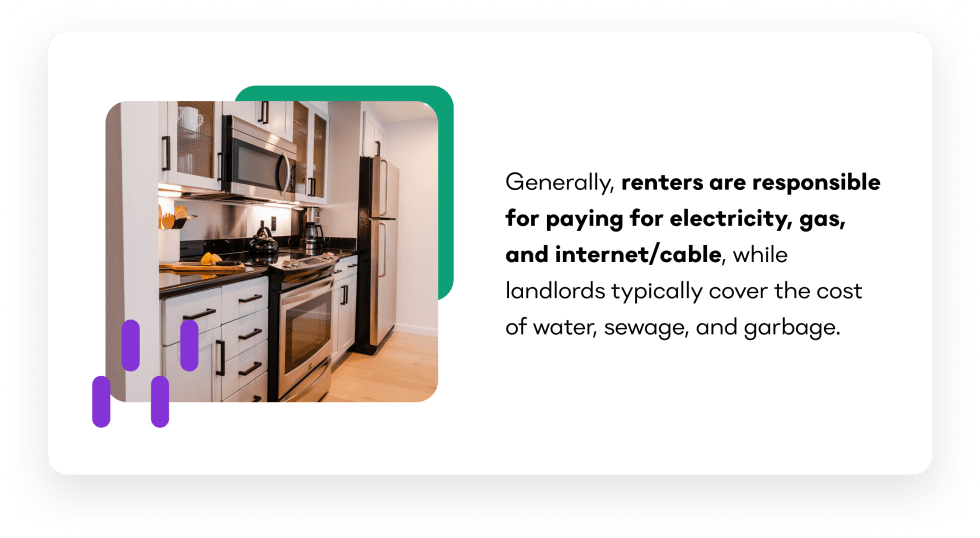
Landlords typically pay utilities that serve the building as a whole, but that doesn't necessarily mean the cost is included in your rent. Depending on the lease, the landlord may receive the bill and then pass some or all of the cost to renters.
Utilities commonly handled at the property level include:
- Water and sewer: Many buildings run on a single water line and meter for the entire property, so the utility company bills the owner rather than each tenant individually.
- Trash and recycling: Waste collection may be contracted at the property level instead of unit by unit.
- Common-area electricity or gas: Hallway lighting, elevators, shared laundry rooms, and other common spaces are typically on building-level accounts.
- Heat or hot water: In buildings with central systems, the landlord may hold the account, although the lease may still allocate some of the cost to renters.
It helps to understand how the meter is set up. A building on a single water meter, for example, can't bill each apartment based on its exact usage unless it uses submeters. Otherwise, the property may include the cost in rent or divide the bill using another method.
Which Utilities Do Renters Typically Pay?
Renters typically pay utilities that can be tied directly to their unit or personal service choices. Electricity, gas, and internet are common examples, but your lease and building setup determine your actual responsibility.
- Electricity: When a unit has its own electric meter, renters commonly open an account directly with the local utility provider.
- Gas: When a unit has its own gas meter, the renter may be responsible for both the account and bill.
- Internet and cable: Renters often choose and pay for their own internet or cable service, although some buildings offer bundled service.
- Heat: Responsibility depends heavily on the heating system. A building with central heat may handle the cost differently from a unit with its own gas or electric heating account.
Here's the key distinction: the person who receives the utility bill and the person who ultimately pays the cost aren't always the same.
| Water/sewer | Often billed through a building-wide account; the cost may be included in rent or passed to renters | Is it included in rent, charged separately, submetered, or divided using a formula? |
| Trash | Often handled at the property or municipal level | Is trash included in rent or charged as a separate monthly fee? |
| Electricity | Often individually metered with an account in the renter's name | Do you need to open your own account, and are any common areas connected to your meter? |
| Gas | May be individually metered or part of a central building system | Is the account in your name, and what does the gas service power? |
| Heat/hot water | May be centrally provided or tied to the unit's gas or electric account | Is heat or hot water included, separately charged, or part of another utility bill? |
| Internet/cable | Usually selected and paid for directly by the renter, though some properties bundle service | Can you choose a provider, and is any required service or fee part of the lease? |
What Utilities Are Included in Rent?
Utilities included in rent are utility costs covered by your regular rent payment rather than billed to you separately. What's included varies by property, so "utilities included" doesn't necessarily mean all utilities are included.
Depending on the rental, included utilities may cover:
- Water
- Sewer
- Trash and recycling
- Heat or hot water
- Gas or electricity, less commonly
- Internet or cable, occasionally
Don't confuse a utility that's included in rent with a separate utility fee. If your lease charges $50 per month for water or divides a building-wide bill among renters, you're still paying that utility separately even if you never open an account with the utility company.
For a deeper look at how these rentals work, see Apartment List's guide to apartments with utilities included.
How Are Utilities Billed in Apartments?
Knowing who's responsible for a utility is only half the equation. You'll also want to know how you'll be charged.
Individually metered. Your unit has its own dedicated meter, and you open an account directly with the provider. You pay for what you use and may also be responsible for setup requirements, deposits, and late-payment or shutoff issues associated with that account.
Master-metered. The entire building runs through one meter, and the utility company bills the landlord. The landlord may include that cost in rent or pass it along to tenants another way, depending on the lease and applicable laws.
Submetered. The building has one master account, but individual submeters track usage for each unit. A landlord or third-party billing company reads the submeter and charges you based on your unit's usage. The building account itself may remain in the landlord's name.
Ratio Utility Billing System (RUBS). Instead of measuring your unit's exact usage, a master-metered bill is divided among tenants using a formula, often based on factors such as square footage, occupancy, or number of bedrooms. Because RUBS allocates a shared bill rather than measuring your individual usage, your charge may not reflect exactly what you consumed.
Flat utility fee. Some leases charge a fixed monthly amount for one or more utilities regardless of usage. Confirm which utilities the fee covers and whether the lease allows the amount to change or includes a usage cap.
Submetering and RUBS are easy to confuse because both can start with a single building account. The difference is what determines your charge: your unit's measured usage with submetering versus a formula with RUBS.
How Much Might Apartment Utilities Cost?
Utility costs depend on where you live, the size and efficiency of your apartment, your usage, and which services your rent already covers.
Apartment List's utility guide, updated in 2025, estimated average monthly electricity costs at approximately $103 for a one-bedroom apartment and $142 for a two-bedroom apartment. Actual bills vary by location, usage, and lease inclusions.
When comparing apartments, look at rent and utilities together. A lower advertised rent doesn't always mean a lower monthly housing cost if you'll be responsible for several separate utility bills.
Where Do Local Utility Rules Matter?
Your lease is the starting point for determining who pays utilities, but state and local laws may regulate how utilities are metered, billed, allocated, or provided.
These examples aren't a complete list, but they show how utility rules can vary by location.
| Massachusetts | Tenants generally can't be required to pay for gas or electricity unless it's separately metered and serves their unit. Separate water billing has additional submetering and disclosure requirements. | Check how each utility is metered, not just what the lease says you'll pay. | Massachusetts Attorney General |
| Texas | Landlords using allocated water billing must follow state rules governing how charges are calculated and disclosed. | If your water isn't individually metered, ask how your share is calculated. | Public Utility Commission of Texas |
| California | Landlords must disclose certain shared gas or electric meter arrangements. | If a meter serves more than your unit, ask what usage you're paying for and how the cost is allocated. | California Department of Real Estate |
| Seattle | Landlords hold Seattle Public Utilities water, sewer, and garbage accounts, but a rental agreement can make renters responsible for the cost. | The name on a utility account doesn't necessarily determine who pays. | City of Seattle |
| New York City | Building owners must provide heat during heat season and meet minimum indoor-temperature requirements. They must also provide hot water year-round. | A landlord's duty to provide heat or hot water is separate from how utility costs are allocated under a lease. | NYC Housing Preservation & Development |
These examples show why there's no single answer to questions like "Does my landlord have to pay for water?" or "Can my landlord charge me for utilities?" The answer can depend on your location, lease, utility, property type, and meter setup.
Check your state or local housing agency, landlord-tenant laws, or public utility commission for rules that apply to your rental. A local tenant-resource organization or attorney can also help clarify how a rule applies to your situation.
This article provides general rental information, not legal advice.
How to Verify Who Pays Before You Sign
Don't rely on a listing description alone. Before signing your lease:
- Ask for the exact clause. Get the specific utilities named in the lease. Don't stop at "utilities included." Find out which ones are covered and whether they're fully included or subject to a separate fee.
- Ask how you'll be billed. Find out whether each utility is individually metered, master-metered, submetered, allocated through RUBS, or charged as a flat fee.
- Ask who holds each account. It could be you, the landlord, or a third-party billing company.
- Ask about deposits and setup fees. These may apply to utility accounts you'll need to open yourself.
- Ask whether utility fees can change. Check the lease for how charges are calculated and what happens if they change.
- Get the agreed terms in writing. Make sure the utility arrangement you're expecting is documented in the lease or an addendum before you sign.
If a listing or leasing agent's explanation doesn't match the lease, ask the property to clarify and correct the written terms before signing.
How to Check Utilities on Apartment List
When you're browsing apartments on Apartment List, check each listing's Amenities and Property Details sections for information about utilities. Listings may indicate that all or some utilities are included or identify particular services covered by the property.
Once you've narrowed down your options, confirm the details with the property and in your lease. The listing can help you compare apartments, but your lease should spell out exactly what's included, what you'll pay separately, and how you'll be billed.
If you're moving soon and need to put services in your name, follow Apartment List's guide to switching utilities when moving.
What to Know About Utilities-Included Apartments
Having utilities included can make renting simpler, but the details matter.
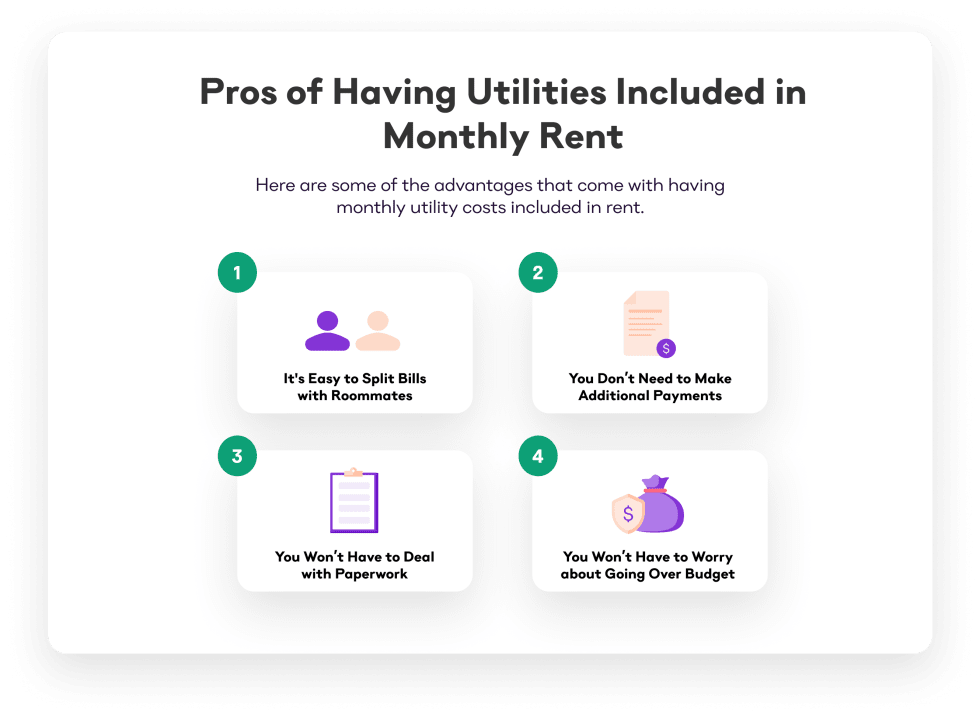
- Simpler budgeting. Utilities covered by rent give you fewer separate bills to track and can reduce some month-to-month swings.
- Fewer accounts to set up. For services fully covered by the property, you generally won't need to open your own utility account or handle that provider's setup requirements.
- Less roommate bill-splitting. Bundled utilities can mean fewer separate bills to divide, although roommates still need a plan for shared housing costs.
- Rent may be higher. Utility costs may be factored into the rent you're quoted.
- Less control. A centrally managed system may mean you can't choose the provider or control every aspect of the service.
- Separate charges can still vary. A flat fee or RUBS charge isn't the same as having a utility included in rent, and an allocated charge may not track your individual usage.
Before comparing a utilities-included apartment with one where you pay services separately, figure out the total monthly housing cost for each.
Frequently Asked Questions
Who pays for water in an apartment?
It depends on the lease and the building's metering setup. Water is commonly billed to the landlord when a building shares one water meter, but the lease may still pass the cost to renters through a separate fee, submetered charge, or allocation method like RUBS.
Are utilities usually included in rent?
Some apartments include one or more utilities in rent, but there's no standard arrangement. Water, sewer, trash, and heat may be included in some buildings, while renters often pay electricity, gas, and internet separately. Check the lease for the exact services covered.
Do landlords have to pay for heat?
Not automatically. State or local laws may require landlords to provide adequate heat, but that doesn't always determine who is financially responsible for the energy used to heat the apartment. Check your lease and local housing requirements.
What is a ratio utility billing system?
A Ratio Utility Billing System (RUBS) divides a building-wide utility bill among tenants using a formula, often based on factors like square footage, occupancy, or bedroom count, rather than measuring each unit's exact usage.
Can a landlord change who pays utilities mid-lease?
Whether a utility arrangement can change during a lease depends on the lease terms and applicable state or local law. If you're asked to take on a new utility charge, review your lease and local requirements before agreeing to the change.
What happens if my roommate doesn't pay their share of the electric bill?
If the electric account is in your name, you're responsible to the utility provider for the bill even if you and your roommate agreed to split it. A separate roommate cost-sharing agreement doesn't change the account holder's obligations to the utility provider.
Find an Apartment That Fits Your Budget
Utilities are part of what your apartment costs each month, even when they don't show up in the advertised rent. Before signing a lease, compare the full monthly cost, including rent, required fees, and any utilities you'll pay separately.
Take the Apartment List quiz to get matched with rentals that fit what you're looking for, then check each property's utility setup before you sign.